A War Over Worldviews: My Interview with Guildhall on Musk, Fedorov, and “the Mechanism”
My interview with the Ukrainian outlet Guildhall on Mykhailo Fedorov, Elon Musk, and why a convergence of worldviews might serve Russian aims.
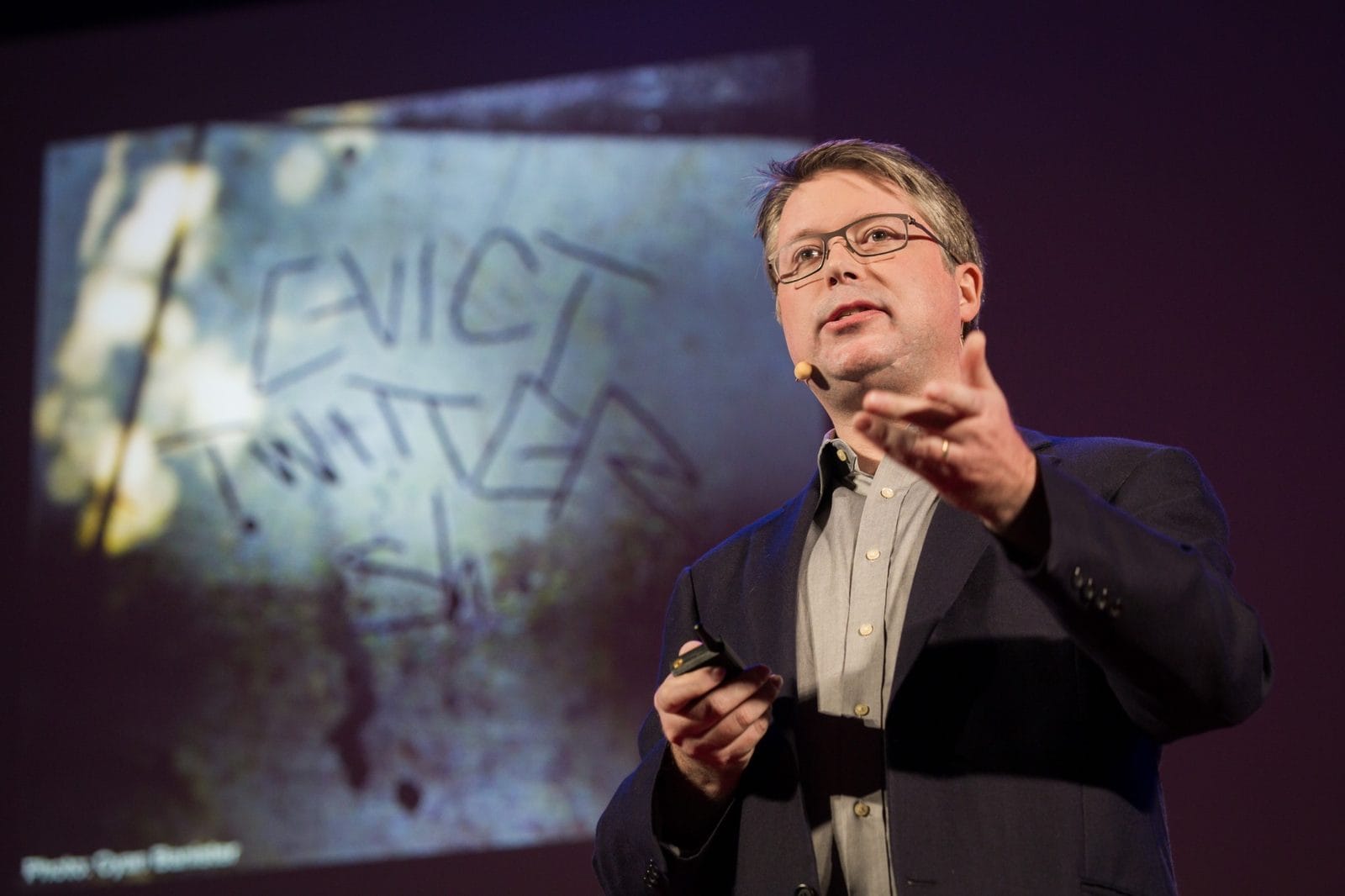
On August 19, I posted a short, blunt assessment to X: that Mykhailo Fedorov — Ukraine’s founding Minister of Digital Transformation, and briefly its defense minister — looked to me like someone who had been drawn into the Musk and Thiel technology-influence network, and that this, rather than anything else, was the likeliest reason President Zelensky removed him. It traveled further than I expected, and it drew the objection it deserved to draw: recruited is a strong word and deserves some explanation.
The Ukrainian outlet Guildhall asked me to discuss this, on the record. The resulting interview ran in Ukrainian on August 20th. What follows is the English version, with my thanks to Guildhall — their questions were insightful and captured nuances not easy to convey on social media.
To review: Fedorov was dismissed in July, after serving as defense minister since January 2026. On August 18 he delivered an address calling not for elections as such but for a “lawful, safe and realistic mechanism” to restore Ukraine’s full democratic process — a formulation that is, in the vocabulary of Ukrainian constitutional law, deliberately broader than elections. He is reported to be planning a trip to the United States. Alex Karp of Palantir reportedly called him with a job offer. And Elon Musk, who has been in direct contact with Fedorov since 2022, has spent the intervening years using Starlink access as leverage while promoting a theory of direct democracy that treats governance as something you can resolve using an app-based poll.
Perhaps most revealing is what Fedorov told interviewer Caolan Robertson this week about his relationship with Musk:
"We continue to be in communication with Elon… four years already… we have managed to find mutual understanding: how, while upholding the democratic values of our countries, to reach a way out even in difficult situations, even in ideological situations.
I would not really want to reveal all the details of our conversations with him...
I am confident I will find various ways to achieve this goal, even without the position I held… we will make new game-changers… a new stage awaits — our team, me personally, and our country."
The acid test is what comes next: does Fedorov pursue the podcast circuit with the likes of tech-friendly voices such as Joe Rogan, Lex Fridman, or Diary of a CEO? Or might he link up with people like Tucker Carlson, Marjorie Taylor Greene, or Thomas Massie? Or will he spend time with Musk or Palantir CEO Alex Karp? Time will tell, and Ukraine's future may well hang in the balance.
“Recruited” — accounting for a strong word
Guildhall: Mr. Troy, you recently wrote on X:
“It sure looks to me like Fedorov got recruited by Musk/Thiel into their tech influence network, then was caught by Zelensky and fired for that reason. Fedorov seems to be advocating for the ‘pragmatism’ they favor, which will ultimately benefit resource extractors.”
You said that in your view Fedorov was “recruited” by Musk and Thiel. What grounds allow you to use such a strong word?
Guildhall’s video of the full interview. Video: Guildhall
Dave Troy: I think you have to look at the character of the interaction between Fedorov and, in particular, Musk over a period of time.
From 2022 onward, Fedorov approached Musk and asked for help with Starlink and other things. Musk responded, and over those years he provided assistance in various ways.
In 2022 Musk said publicly that he was in regular contact with Fedorov. And by all appearances Fedorov was Musk’s principal channel in the context of this conflict.
You also have to understand who Fedorov is. He is a talented young man who was about 31 years old in 2022, and for whom Musk could obviously be a very attractive figure.
So the impression is that over time a certain relationship developed between them. In parallel there is Alex Karp of Palantir, who has taken a serious interest in Ukraine.
Since 2022 he has also engaged with Fedorov and others in his circle. And when Fedorov left the government this year, Alex Karp reportedly called him and offered him a job.
So this is a technology-oriented person. He was involved in rolling out apps to deliver services in Ukraine, he became associated with a technological approach, he was involved in developing the drone program, and so on.
He is a person with that kind of technological mindset. And I think that as a result he has to some degree converged with Elon Musk in how they perceive certain aspects of this conflict.
Musk, for his part, talks about the need to end the war, stop the killing, and so on. And all of that plays into what Russia currently needs: to find a way, if not to end this conflict, then at least to put it on pause — to stop, regroup, and then continue the fight.
Guildhall: We will come back to Russian interests. But “recruited” is a very strong word. Are you suggesting something more than an ideological convergence, or is this primarily about ideological proximity?
Dave Troy: I think it is important to understand that the best way to bring someone over to your side and begin to influence them is to carry out a very quiet, imperceptible recruitment.
It is not that someone asked Fedorov to sign a document saying, “Now you’re with me.” Rather, people become friends. They start comparing notes and ideas, and discover shared views about how things ought to be done.
And that is exactly the interaction we have observed between Musk and Fedorov over time.
In 2022 Musk wrote publicly, “I’m in regular contact with Fedorov.” Around the same time Fedorov effectively defended Musk: after Musk’s statement that Ukraine should remain neutral and give up NATO membership, Fedorov said that as long as Musk kept helping Ukraine, we would treat it as just an unfortunate tweet.
So a certain mutual sympathy begins to form between them. And it continues from there through the promotion of Starlink’s use in various directions.
In February 2025 there was an episode in which Ukraine was offered an extremely harsh minerals agreement that involved repaying debts and other such conditions, and the matter was tied to Starlink access.
So that is another instance of Musk using Starlink access as an instrument of influence over mineral-access agreements.
That particular February 2025 agreement was not signed, but a modified version was signed in April 2025. So the sense one gets is that Musk is applying leverage in the context of the war in Ukraine, and that Fedorov is effectively operating that lever in Musk’s interest — subtly, and behind the scenes.
So there is a relationship between them.
Guildhall: But as a member of the Ukrainian government, Fedorov naturally had to work with Musk, given Ukraine’s dependence on Starlink. Why do you conclude that he was acting in Musk’s interest rather than Ukraine’s?
Dave Troy: I would say he has to act in the interests of both. I am not claiming he necessarily acts exclusively in Musk’s interest.
But at the same time Musk has leverage here. So Fedorov is compelled to respond to Musk’s demands, or risk losing access.
As a result he becomes a kind of fulcrum around which all these questions turn.
Beyond that, he is a technologically oriented person who is comfortable with Silicon Valley’s views on solving problems. So first and foremost, what I am talking about is a convergence of worldviews.
Where Russian aims and Silicon Valley aims overlap
Guildhall: In another piece you argued that Russia is seeking to provoke NATO into a direct armed confrontation or to test Article 5, to remove Zelensky, to halt or freeze the war, and to gain access to Ukrainian resources. At the same time you place the Musk and Thiel network within that broader picture. How exactly, in your view, are these interests connected?
Dave Troy: Russia’s goals are obviously to bring this war to some kind of conclusion that would allow it to regroup, consolidate gains, and work out a plan for what comes next.
Ideally Russia would like an outright victory, but in any foreseeable timeframe that is unattainable for them. So they look at what realistic short-term goals they can pursue, and these are among them.
If you look at the public statements by Musk, Thiel, and others in the technology world on this question, they are not advocating for a prolonged war.
Musk has said repeatedly that he wants peace in Ukraine. He has urged Fedorov to reach an agreement. And more than that, quite recently continued use of Starlink was effectively tied to this question: Musk was essentially saying, “No, I’m not going to provide you Starlink indefinitely. There has to be a deal.”
So from Musk’s side that was stated entirely directly.
He says that enormous numbers of people are dying on both sides, and that is of course true. But I do not think Musk’s principal concern is preserving Ukraine as a sovereign state. For Ukrainians, obviously, that is the fundamental question.
So in practice this puts Musk, in my view, in alignment with Russian aims.
Beyond that, there is a much broader set of factors bringing various figures in the technology world closer to Russian goals.
One of Russia’s core grievances is the hegemony of the American dollar, and many people in the technology community agree with them. They think the U.S. dollar is not the best mechanism. They would like to eliminate the Federal Reserve and move to instruments like cryptocurrencies, Bitcoin, and various other so-called hard-money solutions.
So on questions concerning the U.S. and Russia, a certain convergence of interests exists.
Guildhall: If I understand your argument correctly, you believe Fedorov’s actions may in practice work in Russia’s interest?
Dave Troy: I think he is leaning in that direction. At the same time, if you asked him directly, I think he would say, “No, of course not. That is not at all what I am after. I want to do something new, perhaps.”
If you look at Fedorov’s recent statement in one of his interviews, he said: “We continue to be in communication with Elon — four years already. We have managed to find mutual understanding: how, while upholding the democratic values of our countries, to reach a way out even in difficult situations, even in ideological situations.”
He goes on: “I would not really want to reveal all the details of our conversations with him, but I am confident I will find various ways to achieve this goal, even without the position I held. We will make new game-changers. A new stage awaits — our team, me personally, and our country.”
I read that as follows: Fedorov does not perceive himself as a person on Russia’s side. Rather, he considers himself an advocate of some new, innovative approach to democracy in Ukraine.
And I take it that he and Musk are both on the side of trying to create some new game-changer.
Why Zelensky moved
Guildhall: But ideological convergence alone does not make people part of an organized influence network. Many people can share the same ideas without coordinating with one another.
You also suggested that Zelensky removed Fedorov precisely because of his relationship with Musk. Why do you consider that likely?
Dave Troy: I think it is quite likely. What other reason would Zelensky have had to do it?
Guildhall: Zelensky must have understood the possible consequences, including the risk of losing Starlink access.
Dave Troy: I think if you consider the situation from the standpoint of Ukraine’s leadership, imagine this: Fedorov is in contact with Musk; Musk is whispering ideas to Fedorov about direct democracy, about the need to end the war, or about the risk of losing Starlink access; and Fedorov turns out to be more receptive to Musk than, perhaps, to Zelensky.
That puts Zelensky in an extremely difficult position, where he effectively has to decide whether to leave Fedorov in that post or not.
As far as is known, he was offered other positions, but evidently that did not suit him, and he left.
I laid all of this out specifically as analysis, because I consider this set of questions important and I think there is a significant amount of truth in this version.
What we do not yet know is what Fedorov intends to do next in terms of this kind of challenge to Zelensky’s authority.
It has been reported that he plans to travel to the United States and hold meetings there. If he actually does that, it is in itself already a certain challenge to Zelensky’s authority.
I assume he will have meetings in Washington, and it will be very interesting to see with whom exactly.
But if he then goes, say, on the Joe Rogan show, or to Tucker Carlson, or onto some other podcast, and starts explaining why Ukraine should be doing things differently than it is doing them now — that is already a challenge to Zelensky’s authority.
And now, as a private citizen, he has the ability to do it.
Whether anyone likes it or not, that would serve the goals of both Musk and Russia.
Fedorov may have convinced himself that this is the best path for Ukraine, but it is entirely obvious that it is not the course the government appears to support.
The “mechanism,” and Article 69
Guildhall: You are speaking specifically about elections and about a challenge to Zelensky’s political authority. Yet under Ukrainian law, elections under martial law are not a subject of ordinary political discussion at all.
Dave Troy: Here it is important to return to the wording Fedorov used. He did not in fact call for holding traditional elections. He spoke about a “mechanism by which democracy could function under conditions of a protracted conflict.” And that can mean a great many things.
Guildhall: What we can state as fact is that Fedorov is now playing an independent political role and has effectively begun a political career. If the contradictions between Fedorov, Zelensky, and the groups around them intensify, whose interests does that serve?
Dave Troy: I think the answer depends on the position from which you look at it.
Fedorov may well have convinced himself that it serves both his own interests and Ukraine’s. Musk may believe that too. They may sincerely think they are doing what is best.
And Russia, meanwhile, may be thinking: “Yes, that really is best — not only for Ukraine, but for Russia.”
So there are different points of view here.
Russia has its own view of the situation. And I think it has demonstrated many times over that it considers Elon Musk an interesting enough figure to invest time and effort in engaging with him.
Musk has maintained contacts with [Sergei] Kiriyenko. Kiriyenko and Musk have been in contact for many years — roughly as long as Fedorov and Musk.
Guildhall: Musk has also had contacts with Russia. If I am not mistaken, he has been to Russia, and Elon Musk’s father attended an event connected with Dugin. Given that Ukraine is at war with Russia, such contacts at minimum have to be taken into account.
Dave Troy: Again, what we are talking about is a convergence of worldviews and ideas.
Personally, I consider the war in Ukraine to be, at its foundation, a conflict of worldviews.
And that, it seems to me, is what can unite people and groups who may have no financial or personal connection to one another whatsoever, but who end up on the same side because they share the same worldview and are prepared to fight for it.
So these convergences really do arise here.
Musk has his own vision, which is closer to the Russian point of view than, say, to NATO’s position. And it is certainly closer to the Russian position than to the European Union’s.
He promotes nationalism across Europe and tries to weaken the EU at every opportunity.
And that also coincides with Russia’s interests.
That, in my view, is how this picture comes together.
And again: the main question for the next several weeks and months is what Fedorov decides to do.
Will he close ranks with Zelensky and say, “I’m sorry, I didn’t mean to create a problem. You are running the country — how can I help?”
Or will he set off on a kind of public tour and start talking about innovative ways to hold elections during a war?
My assumption is that if he goes down that road, he will be proposing the use of mobile apps for voting and direct democracy.
And it may not even be limited to electing politicians.
That is what many people miss about the model of direct democracy that Musk proposes.
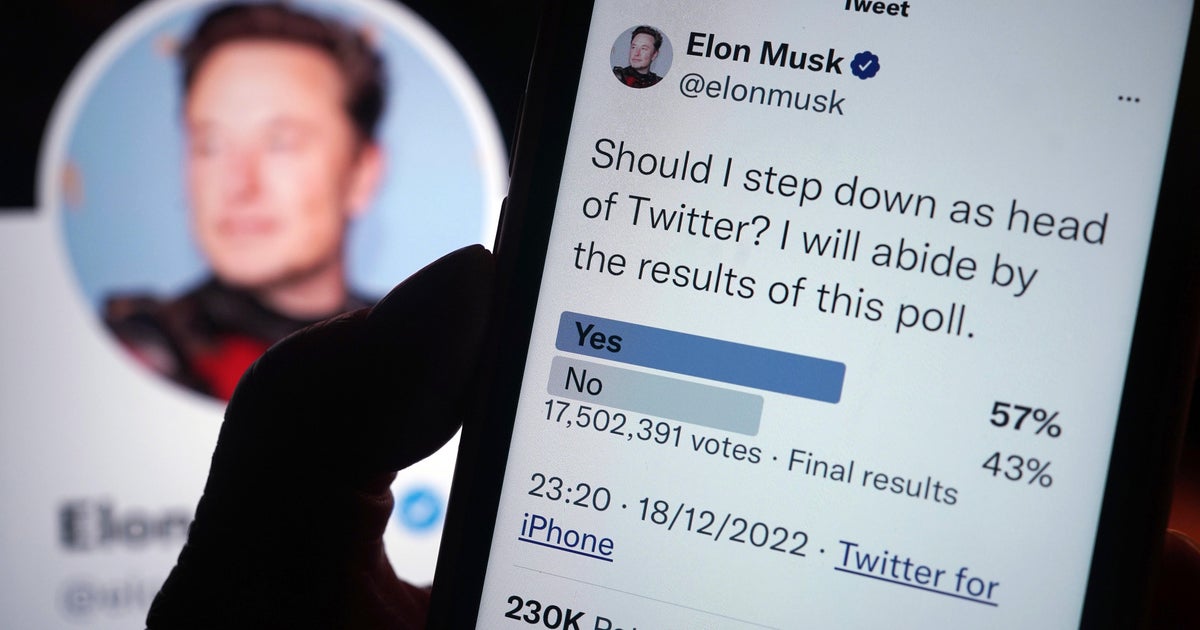
He believes that virtually any democratic question can be reduced to a referendum on a very short, specific proposition — rather like a poll on X.
Musk is known for his X polls and for the phrase Vox Populi, Vox Dei — “the voice of the people is the voice of God.”
If you go back about ten years, Musk was musing about what form of government would make sense on Mars. Obviously that is not happening any time soon, but in theoretical terms he was talking precisely about implementing direct democracy on Mars through mechanisms of this kind.
So without going too far into futurism and hypotheticals, I think he in a certain sense regards Ukraine as a prototype governance system for Mars — for better or worse.
It seems to me that is how he thinks about it.
What Russia gets out of it
Guildhall: A great many hypotheses can be built around such unconventional people with unconventional thinking, and that complicates professional discussion.
But even good intentions can be exploited. Fedorov may sincerely believe his ideas are useful for Ukraine. On the other hand, Russia has people with decades of experience in Soviet and Russian intelligence who understand perfectly well how to exploit such intentions.
You argue that attempts to push Ukraine toward elections during wartime play into Russia’s hands. What, in your view, is Russia ultimately trying to achieve through such a strategy?
Dave Troy: As we have already discussed, during the initial full-scale invasion — which was fairly limited in terms of troop numbers and materiel — it was obvious that they needed some mechanism to destabilize the situation and wage a more hybrid form of war in order to achieve their aims.
Obviously, in the initial phase of the war, things did not go the way they had calculated.
And now, almost five years later, the situation is still completely unresolved.
So it seems to me that they now need to deploy new forms of hybrid warfare that would allow them to destabilize the current authorities and create an opportunity, if not to end the war entirely, then at least to achieve a temporary halt.
That looks to me like a hybrid-warfare strategy.
Their proxies have been calling for elections for several years now. I see it constantly when I track the activity of Russian proxies online. Calls for elections come up regularly.
And of course, as you said, it is unlawful. There is a statutory prohibition on holding elections.
But I think the appeal of this approach for them is that they can influence — or at least perhaps nudge slightly — a person like Musk, who in turn nudges a person like Fedorov into talking about it in a somewhat different form.
And again: it seems to me that the idea of direct democracy is what may ultimately surface.
It allows the question to be reintroduced into public discussion, and to do so while leaning on what they regard as a degree of constitutional legitimacy.
There is Article 69 of the Constitution, which speaks of direct democracy. And that is not necessarily an election, and may not conflict with the law prohibiting elections during wartime.
So a way appears to return this question to public discussion — which of course sets off all sorts of talk and argument about Zelensky’s legitimacy, and that serves their interests exclusively.
I think it is a rather clever, almost compromise-shaped way of achieving that kind of goal without resorting to the full-scale elections campaign they tried to push earlier.
And obviously, the form of hybrid war they tried to carry out in 2022 did not get them where they wanted to go. So now they can try something else.
On top of that, they may never have been in as desperate a position as they are now, given the continuing losses of oil assets, Wildberries, and everything else.
So this is one of the options they can try.
At the same time, one can advance the hypothesis that Fedorov is acting entirely in good faith and still ends up playing into their hands.
And in my view he should think very seriously about whether he really wants to go down this road — trying to play the role of the “smart tech guy” and implement ideas of this kind, while risking playing into Russia’s hands.
Or whether he ought to close ranks with the government and take a longer-term, more considered position.
Guildhall: Mr. Troy, thank you for this interesting point of view, for your time, and for sharing your assessments with us. We will continue to follow this story and see what additional evidence may emerge. I think this subject deserves to be continued.
Dave Troy: Absolutely. I would be glad to continue. And please stay in touch.
Guildhall: Thank you.
This interview was conducted by Guildhall and published in Russian on 20 August 2026. It appears here in English with light edits for clarity. Subheadings have been added. ◼
Additional Suggested Reading
 Sonya Bandouil
 Tim Zadorozhnyy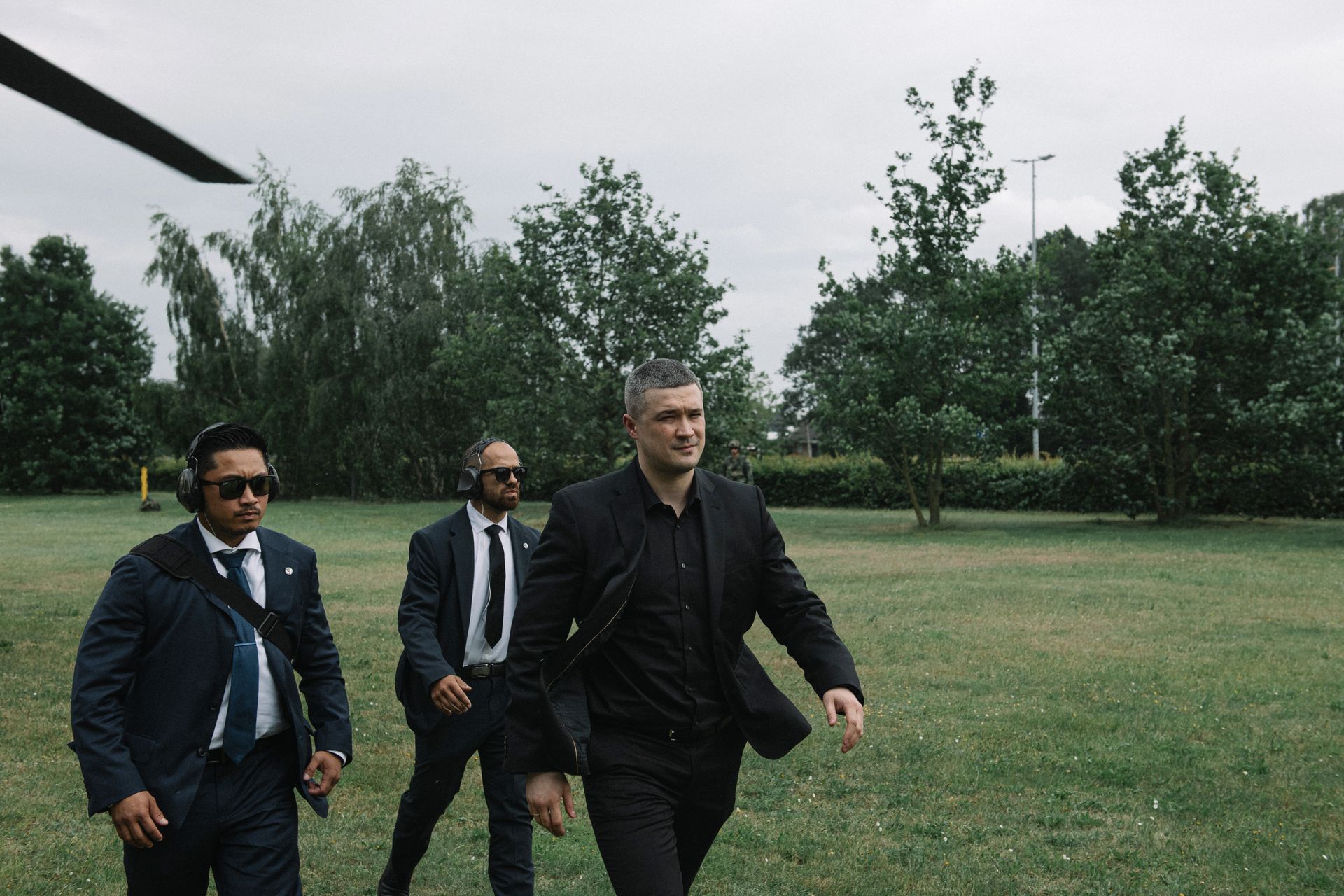
 Sasha Vakulina
 Katie CanalesСергій Ковальов