The Anatomy of an Influence Operation
The popular podcast Diary of a CEO has become a hit, but most people don't know it is part of a sophisticated influence network.
If you've seen clips or episodes of the glossy video podcast Diary of a CEO lately, you're not alone: over the last year it has skyrocketed in popularity to become the top business podcast in Britain and the number two podcast on Spotify, just behind the Joe Rogan Experience.
Not many people know the backstory behind the show's affable and telegenic 33-year-old host, Steven Bartlett, who presents himself as both a successful entrepreneur and curious learner who, following Rogan's lead, excels in the simple art of “just asking questions.” And like Rogan, the formula has helped him attract a roster of top-tier guests and a massive audience.
But many of the show's topics veer from business into territory familiar to America 2.0 readers as the subject of influence campaigns and information warfare. Shows have featured more outlandish fare, ranging from UFOs to World War III. A 2024 investigation by the BBC documented a pattern of questionable health-related claims promoted by the show, with little to no pushback from Bartlett.
Seeing that Bartlett and Diary of a CEO (DOAC) appeared to promote guests and claims consistent with a pattern of covert influence, we launched an investigation of our own.
Bartlett's First Venture: Social Chain
Born in Botswana in 1992 and raised in Plymouth, England, from the age of two, Bartlett was expelled from sixth form and lasted, by his own account, a single lecture at Manchester Metropolitan University before dropping out. He holds no degree and has no background in journalism or science. His primary success has been the manufacture of attention online.

Bartlett's first company, Social Chain, founded in Manchester when he was about 21 years old, specialized in and became successful at viral social marketing. At its peak, Social Chain controlled hundreds of accounts on Twitter, YouTube, and Instagram, with a combined audience reach of well over ten million — big numbers for 2014-era social media.
Those accounts were largely topical and meme pages the company owned outright — among them Student Problems, SPORF, Love Food, and Fitness Motivation — and it separately ran paid campaigns through dozens of social-media personalities, in neither case disclosing to readers that the content was advertising. The company's growth led to a $2 million investment in early 2016 by German businessman Georg Kofler.
But trouble arrived a few months later when UK regulators began an investigation into whether the company had exploited its reach in support of undisclosed paid marketing campaigns pumped out through its network of social accounts and channels.
In August 2016, the UK's Competition and Markets Authority (CMA) determined that the company had behaved in a misleading fashion by running undisclosed ads. The regulator, speaking of the company's promoted content, said that it “may have been difficult for readers to ‘distinguish from other posts, conversations and jokes they appeared alongside.’”
Though CMA lacked the authority to impose fines at that time, they found that Social Chain had arranged undisclosed advertising and “secured undertakings” (a technical term for their enforcement action) that it label paid content going forward. In short, Social Chain and the companies that hired it were all warned about the fact that they had violated the law and were asked to take steps to avoid doing so in the future.
While the company continued to operate, Bartlett and co-founder Dominic McGregor resigned as directors of Social Chain Ltd on September 11, 2020.
Enter Christian Angermayer — and Peter Thiel
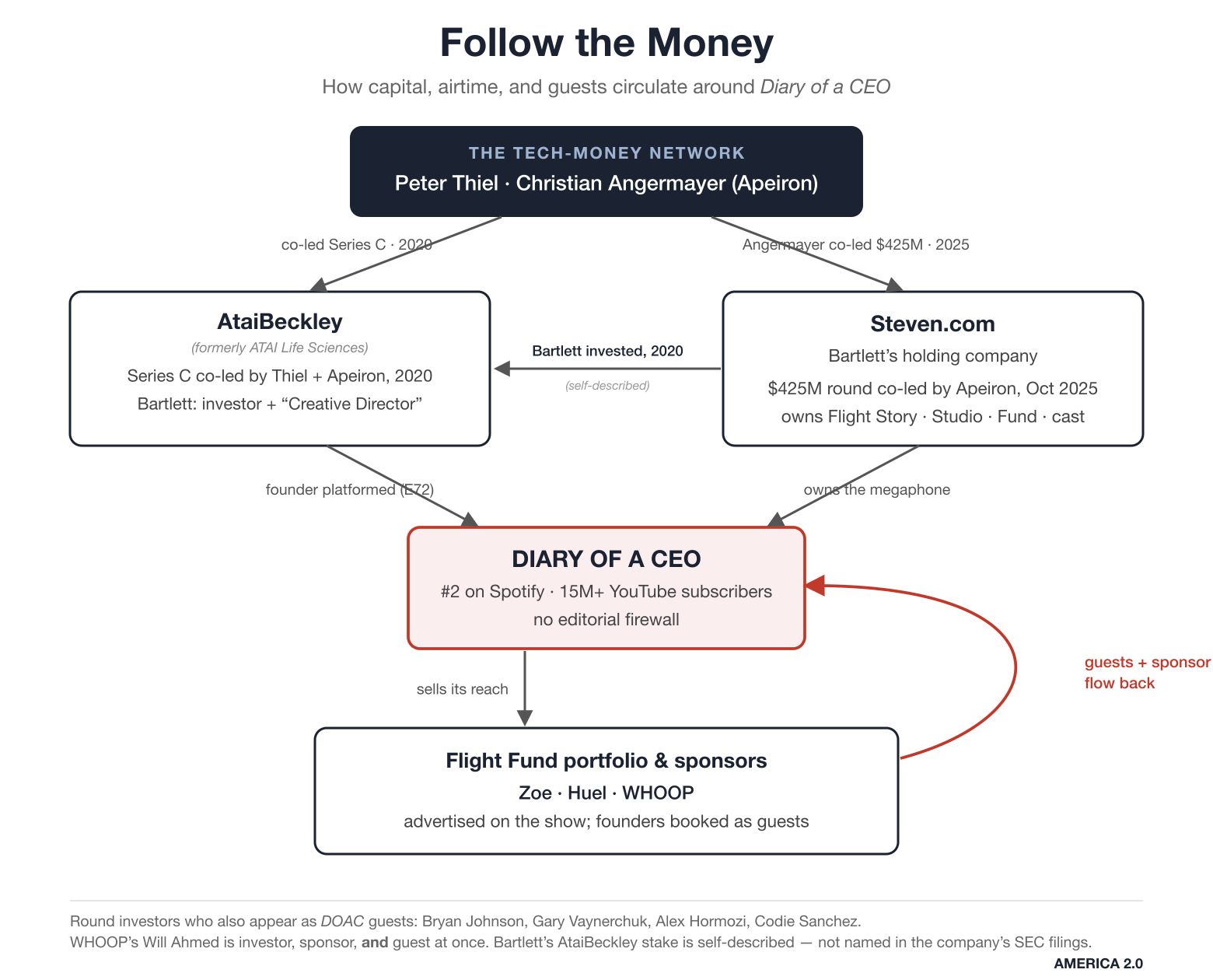
Around the same time in 2020, Bartlett met Christian Angermayer, a German investor connected to venture capitalist Peter Thiel. Angermayer's company, ATAI Life Sciences (now AtaiBeckley, after a 2025 merger with Beckley Psytech), raised a $125M Series C round on November 23, 2020. The round was led by Angermayer's Apeiron Investments, with Bartlett participating as a minority investor.
According to company filings, Jason Camm, an executive at Thiel Capital who held the title “Managing Director and Chief Medical Officer,” also served on the supervisory board of both Atai and another Angermayer psychedelics-oriented firm, COMPASS Pathways, part-owned by Atai.

In March 2021, Angermayer joined Bartlett as a guest on Diary of a CEO, who described him as “a friend,” “nice guy,” and “definitely the most interesting human being I've ever encountered in my life,” adding, “it's been a privilege to work with you over the last couple of months.” But Bartlett does not disclose that he had invested in Angermayer's company, Atai.
After leaving Social Chain, Bartlett has said he set out to “start a company in that space,” adding: “That's how I came to actually work in the psychedelics industry.” According to Bartlett's own websites and public biographies, he also has served as “Creative Director” for Atai since his investment in 2020, and that he “joined the team to lead marketing and creative direction through their IPO.”
Angermayer's Apeiron also co-led the $425 million October 2025 round into Steven.com — the holding company that now owns Diary of a CEO along with the rest of Bartlett's media-and-money stack: Flight Story, his marketing firm; Flight Studio, his podcast production arm; Flightcast, a distribution platform; and Flight Fund, a roughly $100 million venture fund.
Angermayer also has deep connections into Trumpworld. In 2025, Apeiron invested alongside 1789 Capital — the MAGA-aligned venture firm with investors that include Omeed Malik, Chris Buskirk, and Donald Trump Jr. — in the Enhanced Games, the Thiel-backed competition that allows athletes to use performance-enhancing drugs. The event's president, Aron D'Souza, said the deal came together because Angermayer has “a long-time personal relationship with Omeed Malik and Donald Trump Jr.”
His orbit has also touched Moscow. Business Insider reported that at Angermayer's 40th-birthday party in Vienna in 2018, Angermayer introduced Peter Thiel to Daniil Bisslinger, a Russian diplomat who had served as one of Putin's interpreters, who offered to arrange a private meeting between Thiel and the Russian president. (Angermayer's lawyers said he was not present for that part of the conversation, and a spokesperson said he could not recall introducing the two men.)
“If these facts are accurate, they would be of potentially significant counterintelligence interest,” Frank Figliuzzi, a former FBI assistant director, told Business Insider in its 2023 report. “Anytime a Russian official is inviting someone to meet with Vladimir Putin, that has potential significance.”
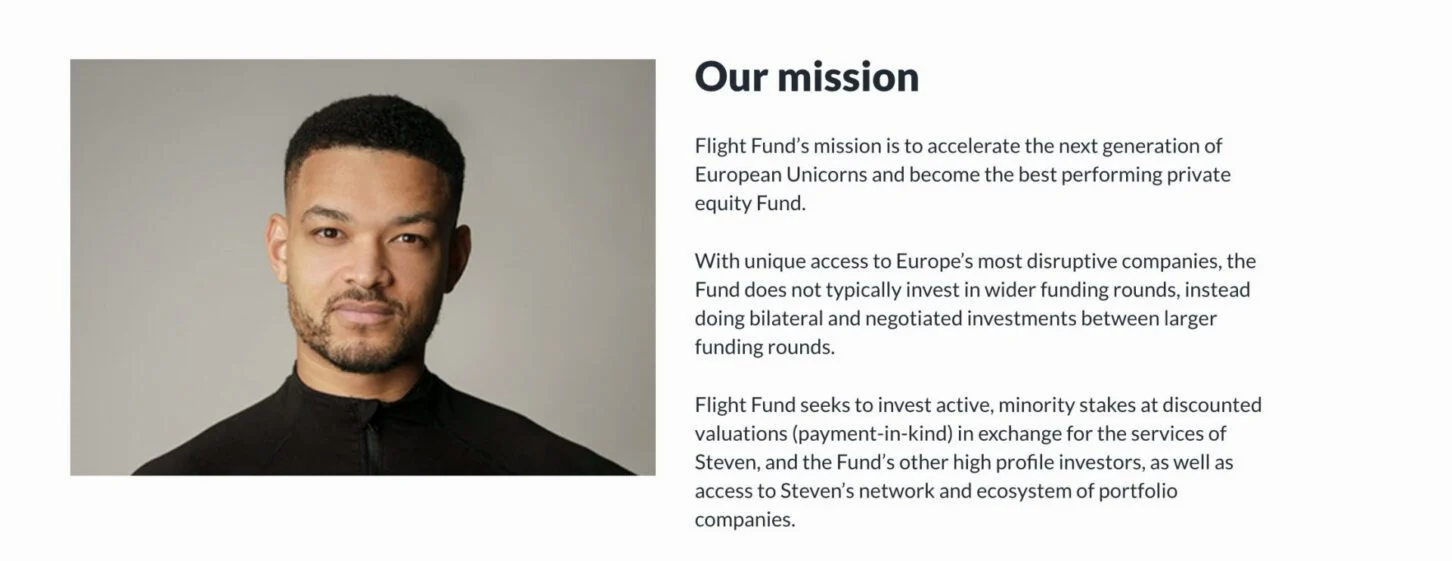
Flight Fund's pitch to founders explicitly sells access to Bartlett's media muscle: it offers them “instant global exposure through direct access to Bartlett's media network” — an explicit promise that capital raised and airtime given are not kept apart.
Consistent with that, Bartlett has featured many of the investors in the Steven.com round as guests, including Bryan Johnson, Gary Vaynerchuk, Alex Hormozi, and Codie Sanchez.
One regular guest, Will Ahmed, founder and CEO of WHOOP (a wearable-device maker based in Boston) also invested in Steven.com. WHOOP is also a sponsor of the podcast, thus giving Ahmed the unusual triple-role of investor, sponsor, and guest.
Information Warfare
While many of Bartlett's guests have promoted questionable medical claims and are connected to longevity and self-improvement, others have promoted highly questionable agendas more closely associated with information warfare.
UFOs have earned a disproportionate amount of Bartlett's attention, and he's featured a range of guests on this general topic, ranging from gadflies like Lue Elizondo, Hal Puthoff, and Dan Farah (director of the speculative documentary The Age of Disclosure) to physicist Michio Kaku and author Annie Jacobsen (“Area 51” and “Nuclear War: A Scenario”).
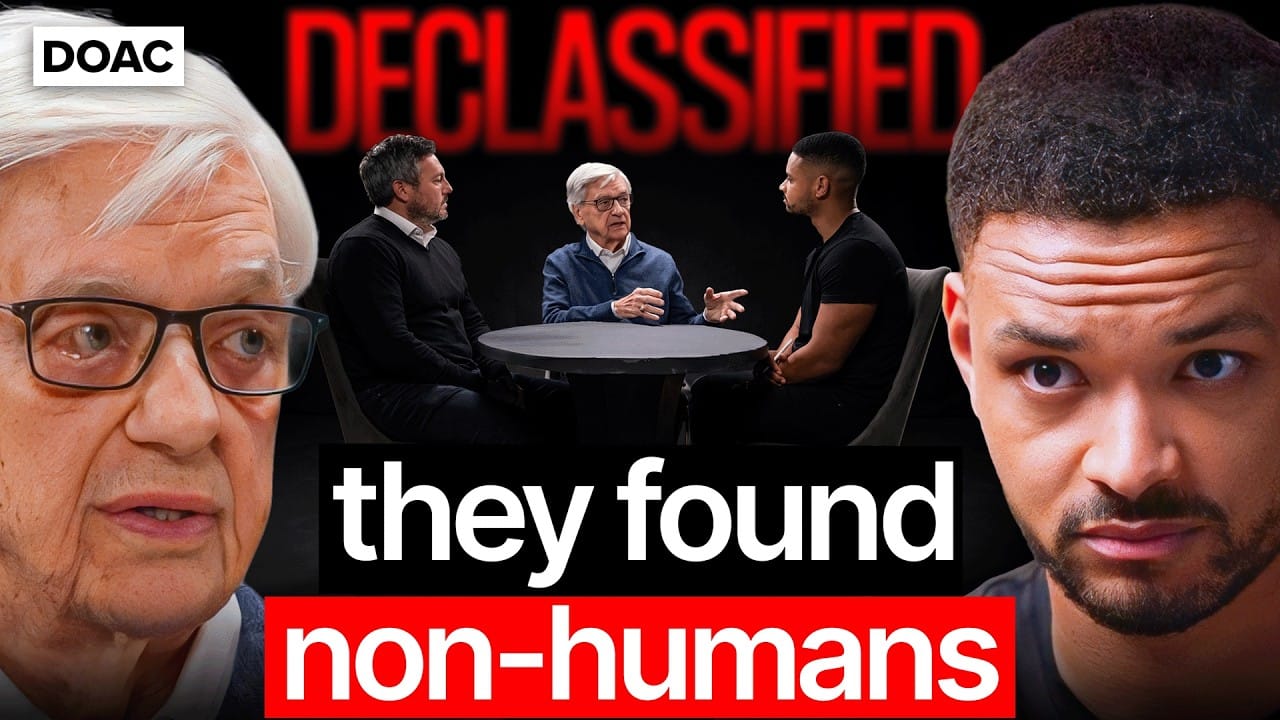
Eric Weinstein, a longtime former Managing Director of Thiel Capital, has also promoted a range of questionable science and UFO related subjects on the show. Weinstein also spoke of his encounter with Jeffrey Epstein, claiming that he was “a construct” and had connections to the Harvard Mathematics Department. When Bartlett asked Weinstein, “How did you know he was connected?” he replied “You can Google it.” Bartlett responded, in his typical non-confrontational just-asking-questions fashion — “So, I'll take your word for it.”
Bartlett has also dedicated time to speculation about Jeffrey Epstein with other guests including security consultant Gavin de Becker, former CIA employees John Kiriakou, Andrew and Jihi Bustamante, and California Governor Gavin Newsom. The through-line? Epstein was a “construct” (Weinstein's word) and an intelligence operative who obviously worked for Israel — never Russia, despite ample evidence suggesting ties with intelligence networks in both countries. Kiriakou in particular has, for years, come under scrutiny for his history of promoting Kremlin-aligned messaging.
One of Bartlett's more outlandish recent guests, “Professor Jiang,” (born Jiang Xueqin, a Chinese-Canadian high-school teacher who has risen to prominence making YouTube videos about geopolitics) was featured in an episode that ran over two hours and claimed that World War III had already begun, that the United States would be brought into a ground war in Iran, and that China and Russia would ally together to fight the United States — which would lose the war.
Jiang's claims, which are indistinguishable from those made by the crackpot Russian geopolitical theorist Aleksandr Dugin, go almost entirely unchallenged by Bartlett, and are legitimized by multiple hours of stacked assertions, each more logically tenuous than the last.
Reputation Laundering
Bartlett's significant reach (#2 podcast on Spotify — #1 in UK; 15M+ YouTube subscribers) has also given the show access to many credible, mainstream guests — each bringing their own audiences of mainstream listeners to DOAC's quirky blend of vanilla prosperity gospel, UFO cultism, and geopolitical prognostication.
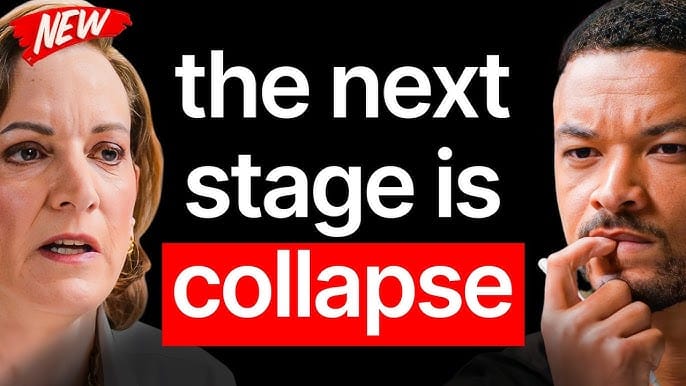
Some recent well-known guests include author and historian Anne Applebaum and geopolitical commentator Ian Bremmer. The show has also hosted authors and cultural figures Yuval Noah Harari, Malcolm Gladwell, Jonathan Haidt, Karen Hao, Tristan Harris, and Neil deGrasse Tyson, along with many recognizable business leaders including Spotify CEO Daniel Ek (notably DOAC's primary distribution channel), Airbnb founder Brian Chesky, Uber CEO Dara Khosrowshahi, and LinkedIn founder Reid Hoffman.
Questionable Sponsors
Many sponsors of DOAC have attracted attention for questionable health claims and conflicts of interests. Among them are Huel, a “meal replacement” product, and Zoe, a gut-health and nutrition science subscription platform. Bartlett is an investor in both companies.
In August 2024 the Advertising Standards Authority (ASA) — Britain's advertising regulator — banned two paid Facebook ads for Huel and Zoe featuring Bartlett because he did not disclose his roles with either company. The ASA ruled that Bartlett's financial interest was “material information” a consumer needed in order to weigh his endorsement, and that omitting it violated the CAP Code's rules on misleading advertising.
In addition to Will Ahmed's WHOOP, other health-related sponsors include Function Health (a blood testing subscription) and Bon Charge, a company that sells sauna blankets and red-light face masks. Realistically, all of these companies (including DOAC itself and AtaiBeckley) converge on a common audience of tech-forward, prosperity-oriented strivers willing to suspend disbelief in favor of what they hope will be a better future.
AtaiBeckley’s own promotional tactics have drawn scrutiny. In March 2026, STAT reported that the company — by then merged with Beckley Psytech — had paid outside marketing agencies to run social-media “influencer” videos hyping its experimental drugs, one claiming a single nasal-spray dose could do “what years of antidepressants could not … in 90 minutes.”
A securities disclosure reviewed by America 2.0 shows that AtaiBeckley paid influence agency Outside The Box Capital $450,000 over six months, which in turn paid podcaster Kim Iversen — who also produces pro-Russia geopolitical commentary — $7,500 for “public awareness services on behalf of AtaiBeckley.” After STAT’s inquiries, the company restricted access to many of the videos, saying it was “reviewing independently produced digital content.”
But some analysts believe Bartlett and Angermayer are abusing the trust of the public. Neşe Devenot, a psychedelics researcher with the group Psymposia, told America 2.0 that “Angermayer has acknowledged developing the psychedelic industry to prevent workers from rebelling against financial elites, who he acknowledges are building a world order that is ‘not good’ for mental health.”
The concern is that depression and other negative externalities of the emerging tech-driven dystopia will themselves be turned into profit centers by and for the very investors creating it. Devenot added, “Angermayer's psychedelic companies have been accused of anticompetitive strategies including aggressive IP tactics and ‘Compass-specific’ rescheduling laws in U.S. states. These strategies are aimed at defining the context for mass dissemination of substances known for enhancing suggestibility.”
DOAC's Potential Trajectory
Given Bartlett's past history, it is reasonable to question DOAC's future direction. Bartlett exhibits a pattern of maximizing reach while failing to meet even the minimum standards of ethical disclosure. The show also seems happy to blend its prosperity-porn content with pseudoscientific, sometimes crackpot guests along with undisclosed sponsors and investors.
It's a trippy blend, and if Angermayer and Bartlett get their way, the show will likely continue to push more content about psychedelics. AtaiBeckley is currently seeking FDA approval for psilocybin and ketamine products in the United States and elsewhere. Besides Angermayer, Bartlett has platformed Michael Pollan, ayahuasca-retreat operator Gabor Maté, “psychonautics” promoter Aubrey Marcus, and major field-funder Tim Ferriss — usually with little to no pushback.
Viewers — and potential guests — should know exactly what they're getting into when lending their attention or their name to Diary of a CEO. ◼
We reached out to AtaiBeckley and to Steven Bartlett for comment and will update this story if we receive a response.
Additional Suggested Reading
 Sam Burne James and Omar Oakes
 Rebecca Stewart
 Jacqui Wakefield
 Luke Bailey
 Shelina Begum
 Bonnie McLaren
 Annabelle WilliamsRussell Hausfeld
 Elaine Chen
 Caroline Lester
 Mattathias Schwartz and Hans-Martin TillackRavi Hari
 Joe Welker