What Russia Believes: Weekly Reports Reveal the Kremlin's Distorted Worldview
The Kremlin's internal security bulletins reveal a fight not over territory but a metaphysical contest — one waged, and slowly won, through information warfare the West largely ignores.
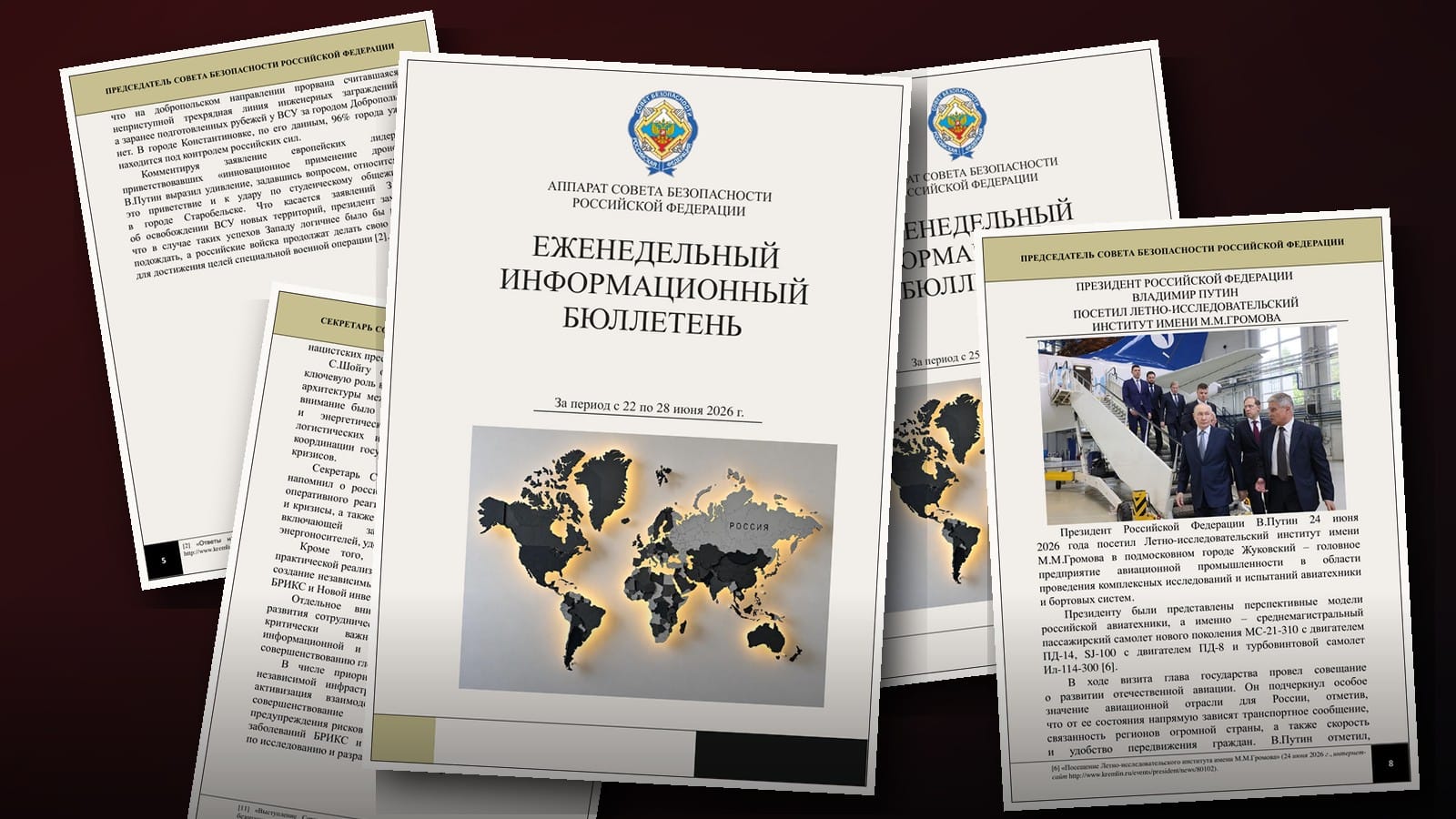
Every week, the Kremlin tells the world what's on its mind. The Security Council of the Russian Federation (the SCRF, or “Sovbez”) publishes a substantial Russian-language digest — its Weekly Information Bulletin — with play-by-play reviews of the latest security developments, as seen from Moscow. These reports are useful analytical artifacts not because they accurately portray world events, but because they reflect the stories that the Kremlin tells itself and its network of allies to sustain a war that most Western observers see as a disastrous folly.
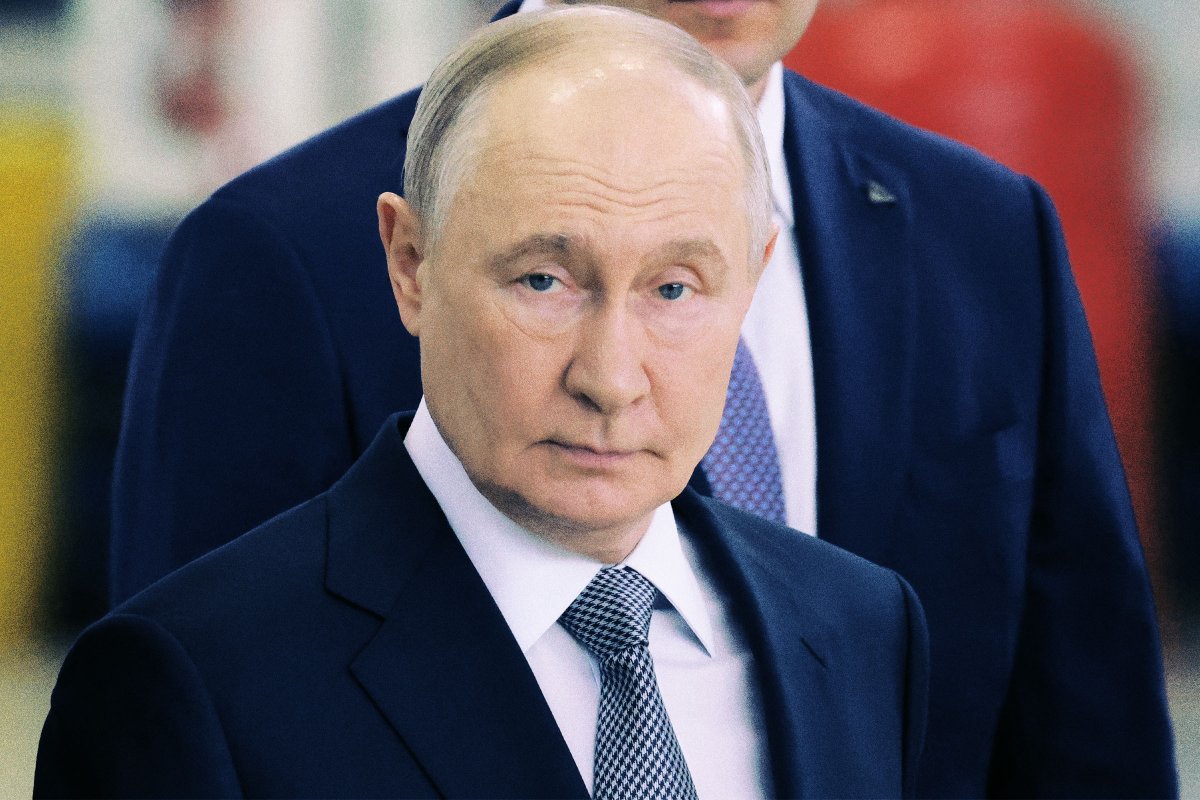
However, these narratives should not be dismissed, as they telegraph clues about how the Kremlin will behave in the weeks, years, and decades ahead. And while it's tempting to think of Putin as a singular or rogue actor, he is merely a manifestation of a durable Russian worldview that will persist long after he is gone.
We collected SCRF reports from the last three months and analyzed them to extract common topics and themes — and the Kremlin's takes are so misaligned with Western perspectives as to seem ludicrous. But it is precisely this misalignment that leads to gaps in our strategic response. When we fail to understand the worldview of our adversary, we will fail to anticipate their behavior.
Crucially, the Kremlin believes its war in Ukraine isn't about territory, but rather part of an existential, metaphysical quest to impose its worldview on the world and, through that process, reconfigure the global order.
To outsiders, this may seem delusional — but it is also working. Russia is slowly exporting its worldview into the West via its political proxies and through information warfare. Eventually, if we afford them enough time, their worldview may gain the upper hand in the West. And based on the lack of counter-response and their progress so far, that outcome is a distinct possibility.
AI and Absolute Sovereignty
Putin is focused on achieving absolute sovereignty, particularly in the realm of nuclear weapons and artificial intelligence. At the recent Eurasian Economic Forum in Astana, Kazakhstan, Putin claimed that Russia is one of only three countries able to build “sovereign AI,” and floated the idea of hosting a world AI summit in 2026. He has stressed that countries without their own AI technology “risk turning into a digital periphery,” or a colonized state.
Never mind that Russia faces multiple practical challenges in developing its own sovereign tech stack (lack of chips, lack of training data, lack of expertise), Putin says, “Russia can only be a strong, independent power — or there will be no Russia.” Closing this gap between self-perception and reality will necessarily mean dependence on China, or gaining access to American technology through subterfuge. Still, this is the story the Kremlin is telling itself when it comes to artificial intelligence.
Building the Multipolar World
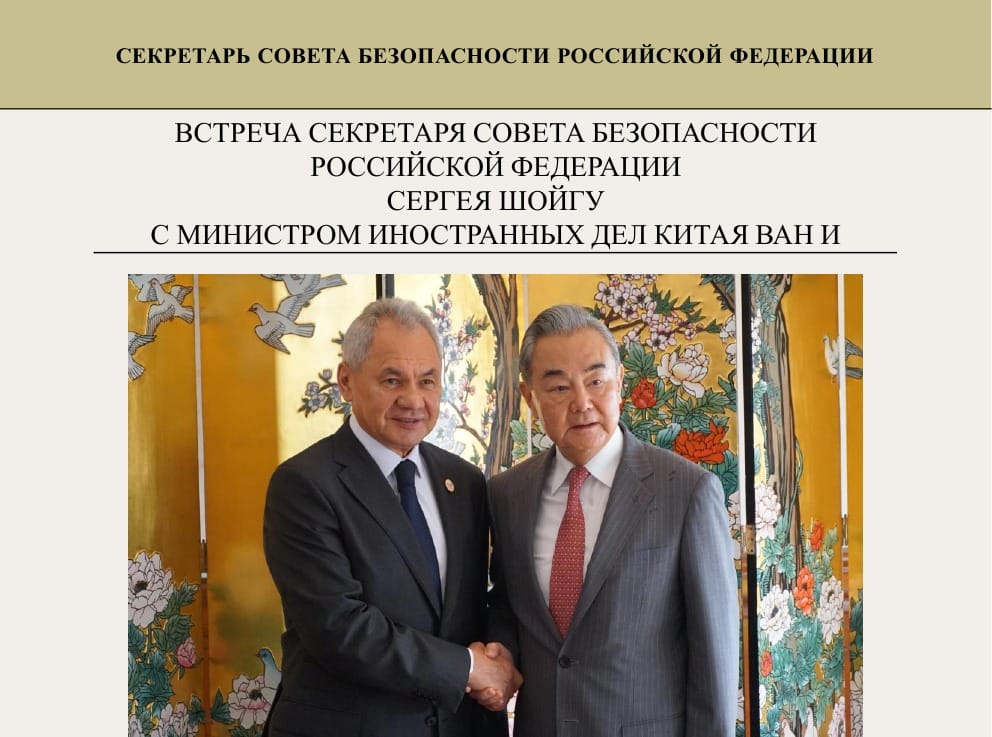
The bulletins depict SCRF Secretary Sergei Shoigu as the face of a successful and emerging BRICS multipolar world. On June 23, he met with China's Wang Yi in New Delhi to discuss the ongoing global reconfiguration: a BRICS emergency-response mechanism, strategic resource funds, a grain exchange, a new investment platform, biosecurity coordination, a vaccine R&D center, and an independent satellite and communications structure.
The narrative thrust here is that while the West melts down, Russia and its partners are building the new multipolar world order that will become the foundation for the future. Shoigu, who also praised the Taliban for allegedly cutting Afghan drug trafficking “by 90%,” is normalizing regimes ‘cancelled’ by the decadent West and bringing them into the BRICS fold.
Defense Against the Western Enemy
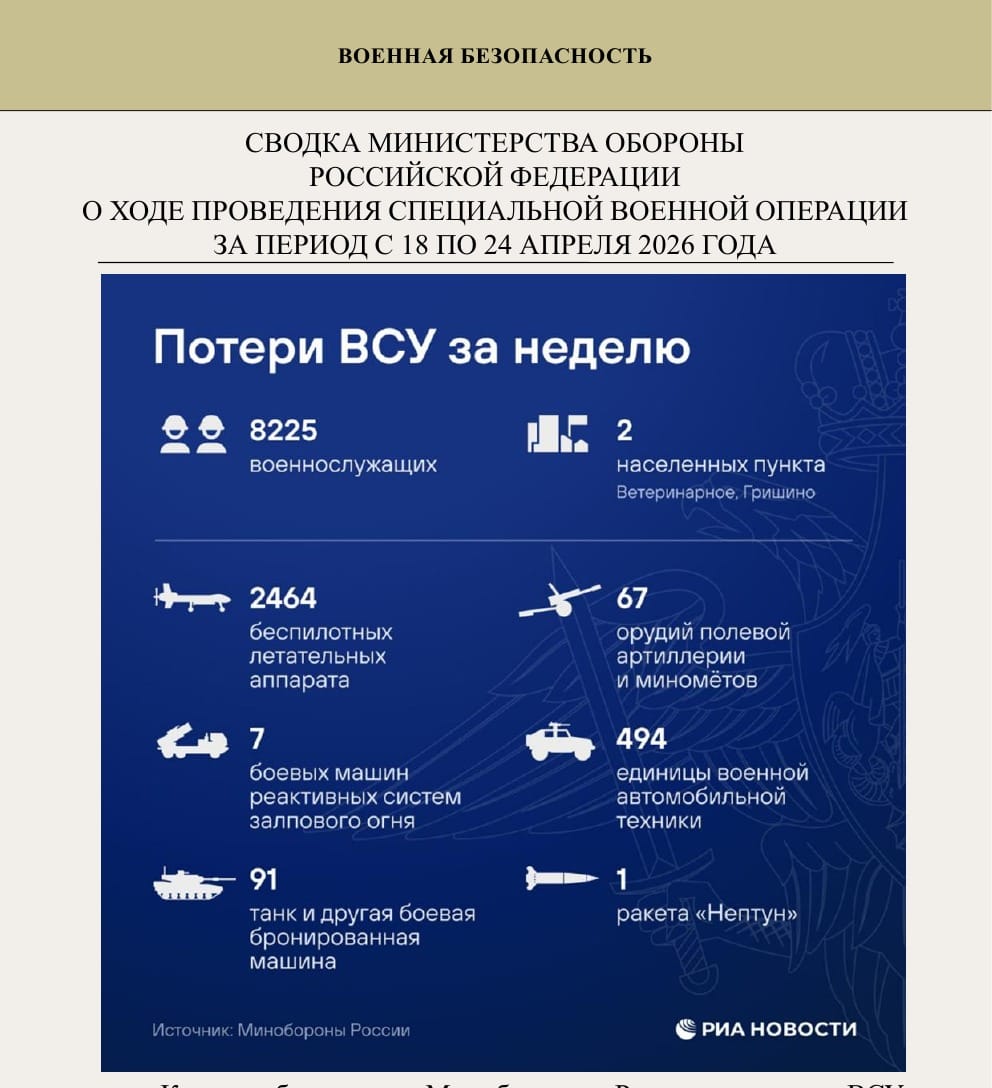
Each week's bulletin includes a war diary recapping recent developments. Western moves are cataloged as encirclement: a NATO forward headquarters now operational in Rovaniemi, Finnish Lapland (154 km from the border, under Swedish command); German rearmament; EU lending to Ukraine. All are perceived as emerging threats to which Russia is simply responding rationally.
Typical war updates claim Russian forces are “advancing along all sectors of the front,” with the Center grouping pressing toward Dobropillia, the East grouping widening a “security zone” in southern Dnipropetrovsk, and the Dnepr grouping fighting into Zaporizhzhia.
Putin narrates any gains personally, telling reporters on June 28 that a Ukrainian line “considered impregnable” had been breached and that Kostiantynivka was “96 percent under Russian control” — with cherry-picked statistics designed to spin rather than inform.
Despite massive battlefield losses in Ukraine (Ukraine’s General Staff counts roughly 1.4 million Russian casualties, killed and wounded, since 2022), the Kremlin prefers to highlight threats from Europe and the United States, offering urgent instructions to “sharply ramp up air-defense production” against “new drones from Europe.”
The Kremlin believes time is on its side: Russia is the calm, patient party, while the West is the anxious and escalatory. Furthermore, they assert that Ukrainian claims are fiction that time will refute — because the real trend is inevitability and eventual Russian advance along every measurable axis.
They reject any framing that they are on their back-foot (we're grinding, taking losses, under sanctions) and instead adopt an offensive one (we can afford to wait; you can't).
Weaponizing Historical Memory
No discussion of contemporary Russian warfare can be complete without anchoring itself into the so-called “Great Patriotic War.” Russia's portrayal of itself in World War II as the great vanquisher of Nazism is beyond parody by any objective historical reading, but the Kremlin casts the Ukraine war as a national security priority that seeks “restoration of historical truth” and the protection of “historical memory” against external influences pushing for the “falsification of history.”
Shoigu describes the drive by the US and its allies “to preserve their dominance” as the “root cause of current world upheavals” — and as an operation whose steady progress makes its completion merely a matter of time, captured in Putin's taunt that if the West truly believed Ukraine was liberating territory, it should “just wait” while Russian troops “continue their work.”
Downplaying Energy Security Concerns
Recent strikes on Russian energy infrastructure have caused what SCRF euphemistically refers to as a global “fuel deficit.” In response, the Russian government has imposed a temporary export ban on gasoline and jet fuel, has stood up a 24/7 monitoring office, and reports 1.7M tons of reserves, “down only 4%,” year-over-year.
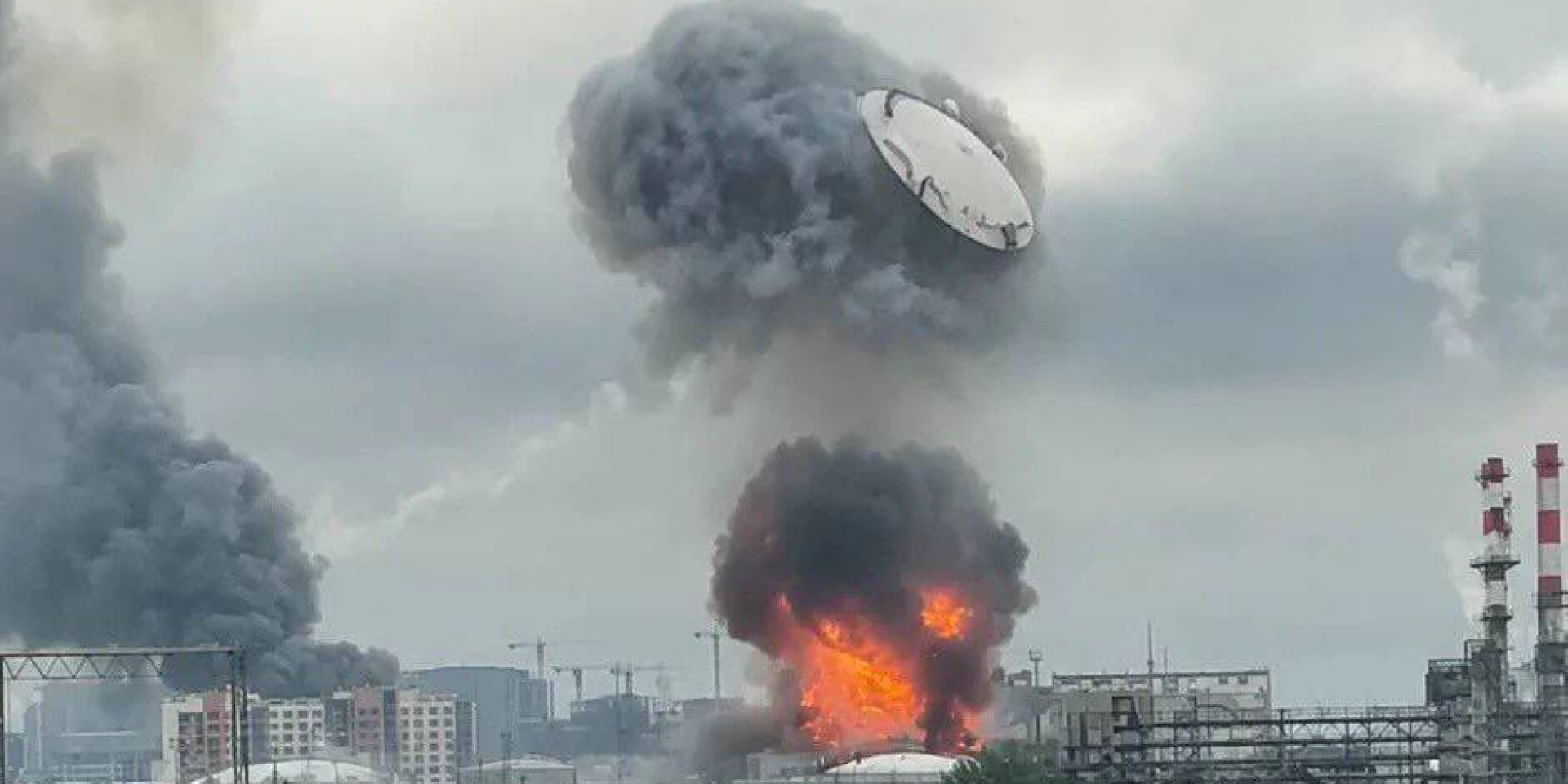
Meanwhile, according to the bulletins, this has caused Crimea and Sevastopol to declare a regional state of emergency, with a “few days” of fuel against a 70,000 ton per month fuel need. Overall they depict Ukraine's impact on energy flows as an “artificial rather than systemic” crisis, and a global security risk that affects Ukraine and the world more than it affects Russia.
Long lines to buy gasoline are downplayed as a psychological manipulation caused by social media-driven panic buying, rather than any kind of real shortage or strategic constraint.
Claims of Ukrainian Terrorism in the United States
One of the more creative narratives involves Russia's capture of an unnamed 17-year-old in Dagestan who allegedly led a large international terrorist network attached to Ukraine's special services. The suspect allegedly confessed under interrogation by the FSB to a series of arson attacks and bomb threats in the United States and Europe — more than 45 arsons in Texas in January 2026, and, in February and March, others in California, Germany, and Italy. No evidence corroborating the testimony is provided.
The reporting loosely matches some possibly related real incidents in the US, but there is no known information that would link this activity to Ukraine. Directing blame for vaguely reported crimes towards Ukraine (or other Western adversaries) is classic Russian active measures tradecraft, and defies any logic or rational inspection.
They also express concerns over election security in the September 2026 Duma vote, and a wish to protect the election from “external interference,” calling for an all-of-government approach in response.
The US-Iran Conflict and International Affairs
On Iran, the bulletins adopt a pose of cool detachment — no cheerleading, lots of dry “just the facts,” even quoting American outlets like Axios. But the story they choose to tell depicts the United States as reckless, with Trump personally ordering strikes on ten targets in Iran.
They pointedly note that Washington hit Iran “during a truce” while Iran, by contrast, is shown citing the UN Charter and its right to self-defense. The Kremlin flags that America will happily lift sanctions to buy Iranian oil in dollars, yet still refuses any such relief for Russian-occupied Crimea and Donbas. America makes the chaos; Russia merely observes the mess Washington made.
Other items the bulletins flag — a shooting in Washington, fighting in Mali, and an Aliyev–Zelensky meeting in Azerbaijan — signal what's important to them: primarily, anything that highlights the unraveling of the EU and NATO.
Exporting Their Worldview
Russia is acutely aware that its future depends on converting others to adopt their perception of the world. Accordingly, every bulletin contains some cheerleading about how swimmingly that effort is going.
Often, they spotlight sympathetic coverage in outlets such as India's MP-IDSA (flagging “anarchists and antifascists” on the US left) and the Indian foundation ORF (on China's undermining of US frontier AI models). In the US, a Heritage Foundation report features discussion of AI as a paradigm shift and opposition to censorship under the pretext of fighting disinformation. Routing their own contentious framing through foreign and US conservative sources contributes to the idea that their view is neutral, reasonable, and widely adopted — even if the endorsements are highly cherry-picked.
AI earns consistent attention, with the US painted as weaponizing AI to preserve its own hegemony and to contain China, and Europe as an over-regulating also-ran that will inevitably lose the AI race. One analytical review warned that “a quantum apocalypse is closer than thought,” a preview of what readers should fear next.
Crucially, the Kremlin understands that they don't need the West to fully agree with their worldview, but they do need enough people that accept their core premises: multipolarity is arriving; the US is a declining aggressor; sovereignty is the only true refuge. Once that becomes the majority view, what seems now like a global “reconfiguration” looks less like Russian ambition and more like the consensus view. When that occurs, in the Kremlin's own telling, its plans will begin to come to fruition.
Dangerous Western Misperceptions
Western analysts tend to focus on material losses — troops, equipment, territory — and calculate odds of military success in Ukraine. But this misplaces the real location of the battlefield which is in the hearts and minds of the ~7 billion in the so-called global south.
While Russia may not be gaining ground in Ukraine, it's vital to understand that they believe that they would do so instantly if not for the interference of outside aggressors. And they believe that that aggression will evaporate overnight if they can achieve sufficient mindshare globally. Within that framework, an Indian think tank carrying its China line, or a US strategy targeting “antifa,” read to them as wins.
So while Western analysis might be tempted to discount Russian ambitions because of their lack of battlefield progress in Ukraine, their information warfare operations throughout the world are making slow but steady progress.
Their gamble, which may be correct particularly if the West continues to be oblivious to the threats posed by information warfare, is that an eventual tipping point will be reached that will allow not only for the capture of Ukraine, but for the victory of their worldview globally — along with all of the implications of that: the end of US ‘unipolar’ hegemony, along with NATO and the European Union.
The stakes are massive — and those downplaying or underestimating the risks posed by Russia's worldview warfare are placing the world's democracies at existential risk.
Reading (and Responding) in Proper Context
These documents should be read in proper context as Kremlin communiqués designed to shape official and domestic public opinion in ways that advance their agenda. They are neither detailed internal security documents, nor propaganda designed for foreign audiences. Taken together, they offer a coherent picture of what the Kremlin believes it is doing and why, and where they hope to go next.
The West in particular has a choice to make: continue to be ignorant of their internal logic, or use this information to shape our response.
The danger in ignoring it is that they will continue to erode democracies and gain mindshare for authoritarianism globally. This process is well underway regardless of their lack of battlefield success in Ukraine.
If the West wants democracy to survive into the 22nd century, we need to decide now to fight Russia on all of the fronts where they are waging battle, both in Ukraine and in the hearts and minds of future generations. Anything less is a dereliction of duty. ◼
The primary sources for this analysis are the Security Council of the Russian Federation’s own weekly Information Bulletins (Еженедельный информационный бюллетень), published in Russian by the Council’s Apparatus at scrf.gov.ru. The twelve issues analyzed here — covering April 6 through June 28, 2026 — are self-hosted below so readers can consult the originals directly without accessing Kremlin servers. Each is a Russian-language PDF.
Additional Selected Reading
 Victor Tangermann