Wilderness of Mirrors: Five New Films that Grapple with Our Shattered Reality
Rehearsal, re-enactment, re-telling — as reality becomes more fragmented, a wave of films employs novel storytelling tools in the hope that we might catch a fleeting glimpse of something real.

At a moment when we are awash in images real and fake, cinema seems to be the arena of choice for making sense of contested reality. A flurry of recent films with interrelated subject matter are rooted in re-enactment, revisiting, revision, and re-telling — and together offer a fascinating portrait of this strange moment in history. [Warning: micro-spoilers that serve our argument lie ahead.]
Holmes
Nathan Fielder’s brilliant You Can See Everything, pitched as a “documentary” about con-woman entrepreneur Elizabeth Holmes, is bracing, brave, and terrifying — but it’s not operating within the documentary tradition handed down from the masters like the Maysles brothers, Errol Morris, or Frederick Wiseman. The film is a monument to patience and artistic practice. The premise is that the film will capture Holmes in her last days before heading off to prison. What Fielder and co-director Lance Oppenheim deliver instead isn’t the humanizing portrait Holmes might have expected, but a journey into a hall of mirrors where deception bleeds into portrayal and then back again.
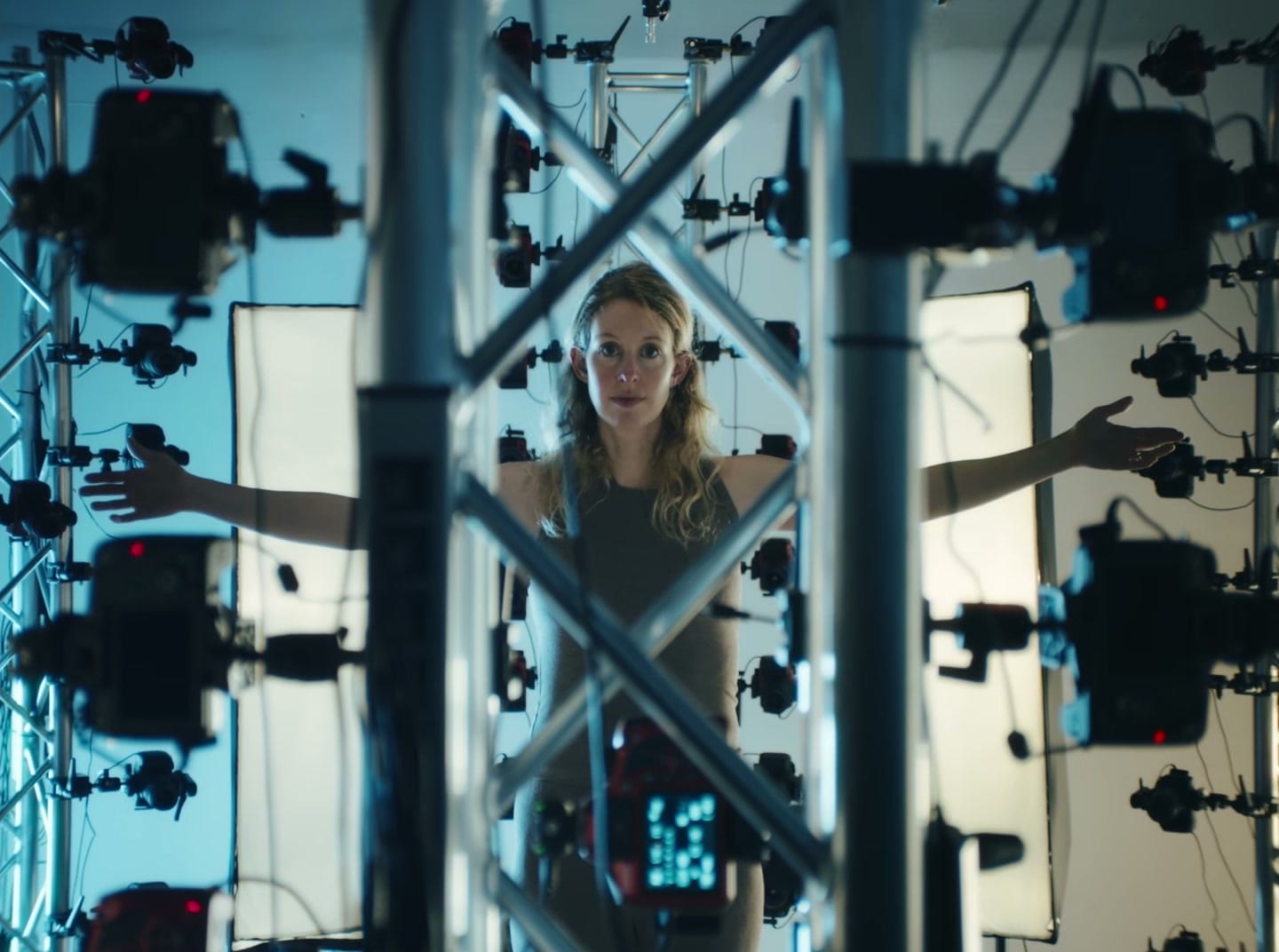
Without getting into too many spoilers (you’ve been warned), what most becomes clear as the film progresses is that Holmes is not just a master at deceiving others; she is principally concerned with deceiving herself. Billy Evans, her partner, is initially presented as her staunchest defender. But as the project advances (in scenes filmed long after Holmes has gone to prison), it becomes clear that Evans is himself a master manipulator who has breached Holmes’ trust while also colluding with her to deceive the filmmakers.
Amanda Seyfried (who portrayed Holmes in the miniseries The Dropout) is brought in for additional sense-making horsepower, but she is as bewildered as the audience. Her on-screen confrontation with Evans beams neutrons at his uranium core in an effort to reveal something, anything that might be real or true. The gambit pays off — the decoy does unsettle his pattern of practiced deceit.
Overall, the film works because it is both riveting art and a disciplined meditation on the practice of truth-seeking in the era of social media and personal image-making. As a documentary, a central question remains: what was being documented, precisely? Told honestly, it is a film about Fielder’s attempting to make a documentary but instead crafting a fugue that folds in on itself while bringing the viewer tantalizingly close to truth, but never quite to it.
Musk
Alex Gibney’s Musk, by contrast, is a dull disappointment. Larded up with self-indulgent CGI graphics (an AI puppet of Musk that makes him look cooler than he is) and pointlessly violent first-person-shooter video game sequences, it seems tailor-made to push the buttons of ActBlue donors while studiously avoiding breaking any new ground.
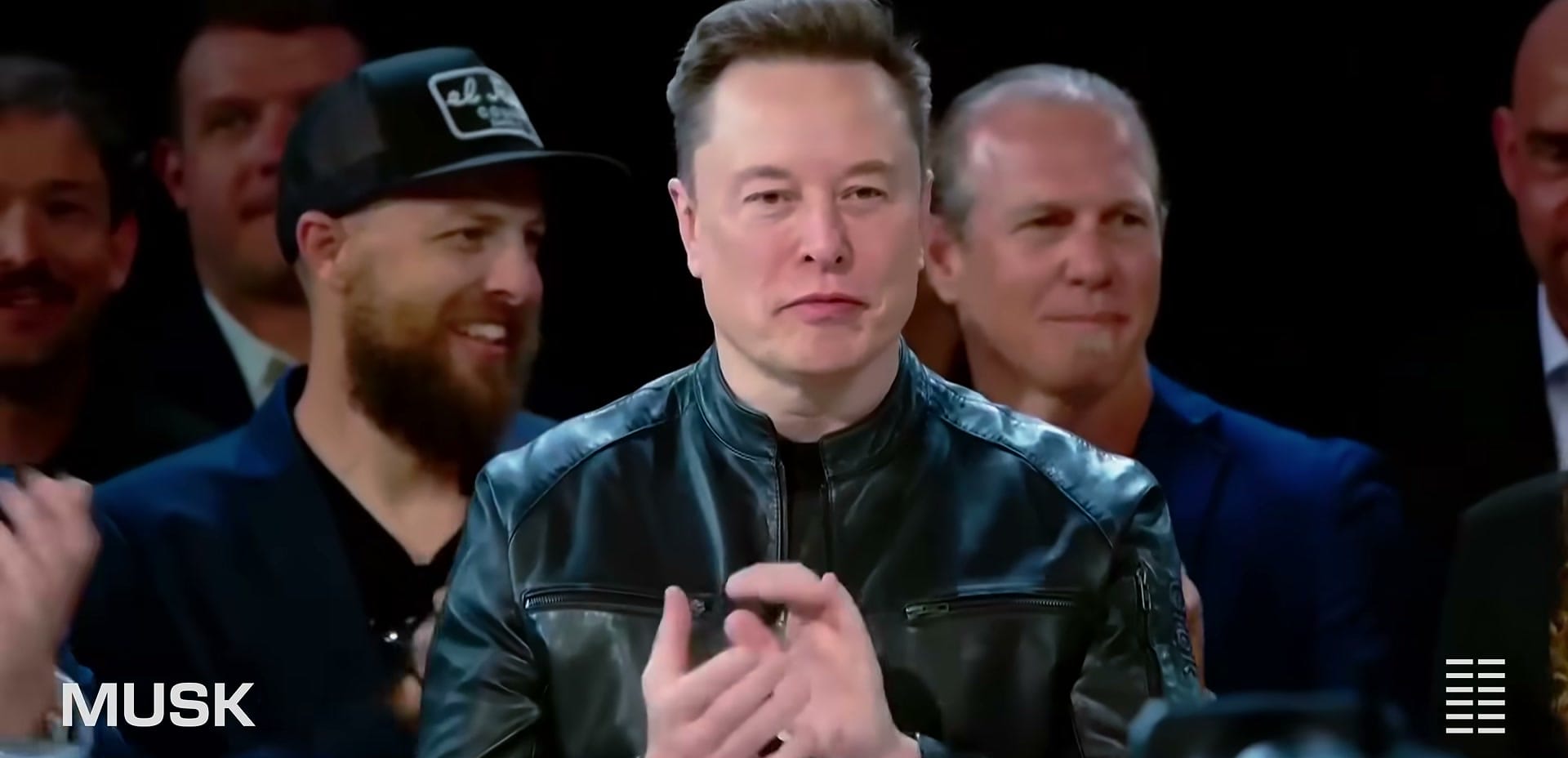
It’s as if Gibney’s team mined their LexisNexis account for every news story they could find in an initial search and strung it together in a giant run-on sequence that when they timed it happened to run four hours.
Those unlucky enough to see it in a theater paid for that mistake. As someone who knows quite a bit about Musk’s sins, I was patient during the first two-hour tranche. “Relax,” I thought, “they’ll get to the substantive stuff in the second half.” But I was wrong — it never came. It likely wasn’t Gibney’s intention for viewers to leave angry at him, but that’s how it went for me and my wife.
If for some reason one has been in a coma for the last five years, it is certainly possible that casual viewers will learn something from the film. The segment on his abuses at DOGE and dismantling USAID is damning and important — kudos for capturing that episode.
But perhaps most damning for Gibney is the final conclusion he drew from his inquiry: that Musk is doing all this stuff for no reason.
As a close reader of his moves, I beg to differ: he has joined in with Putin’s war on the West. In aligning with every Kremlin-friendly voice in the US and Europe, he is an enemy combatant, especially as evidenced by his antipathy towards Ukraine. His arc was becoming obvious to serious analysts as far back as 2020. Gibney manages to elide all this, and Musk’s ongoing relationship with Putin and his proxies is never explored.
Gibney invests entirely too much screen time in Ashley St. Clair, one of Musk’s young baby-mamas (or “breeders” as first wife Justine calls them). Clearly someone of questionable judgment and character, the audience is asked to believe she has “changed” and is somehow now trustworthy. Don’t buy it; in the months since filming wrapped she’s been carrying on with the insufferable Hasan Piker and role-playing as a socialist.
By placing so much weight on St. Clair’s testimony, Gibney risks tanking the credibility of the entire film based on her future trajectory. Worryingly, he indulges her ridiculous and admittedly unexplained assertion that Musk had “10,000 lasers in space,” a claim which sent countless Bluesky grandmothers into left-wing conspiracy wonderland. Those of us who aim to debunk such rumors don’t appreciate that extra workload.
One important story Gibney manages to simply miss is the origin story of SpaceX and Musk’s long personal relationship with former Rep. Dana Rohrabacher (R-CA), famously described as “Putin’s favorite congressman” who was responsible for crafting the legislation that made SpaceX possible. Rohrabacher’s efforts to collaborate with Russia in privatizing the US space program are well documented. Gibney never mentions it.
Watch Musk as it was intended — on your iPad while you cook dinner — via pay-per-view on Apple TV now, or on HBO Max if the planned longer cut arrives there next year. And bemoan the opportunity this film missed. Hope and pray that Gibney isn’t the expert Speaker Jeffries hauls in to testify in 2027 when they set about figuring out Musk’s motivations. He doesn’t know what’s going on.
Cruise
Digger received a wave of negative attention upon its release in October. A fabulously expensive and indulgent film, it features the always-talented Tom Cruise in fat-suit prosthetics, dropping the viewer into a world that’s constructed, stylized, and grotesque — and without clear explanation.
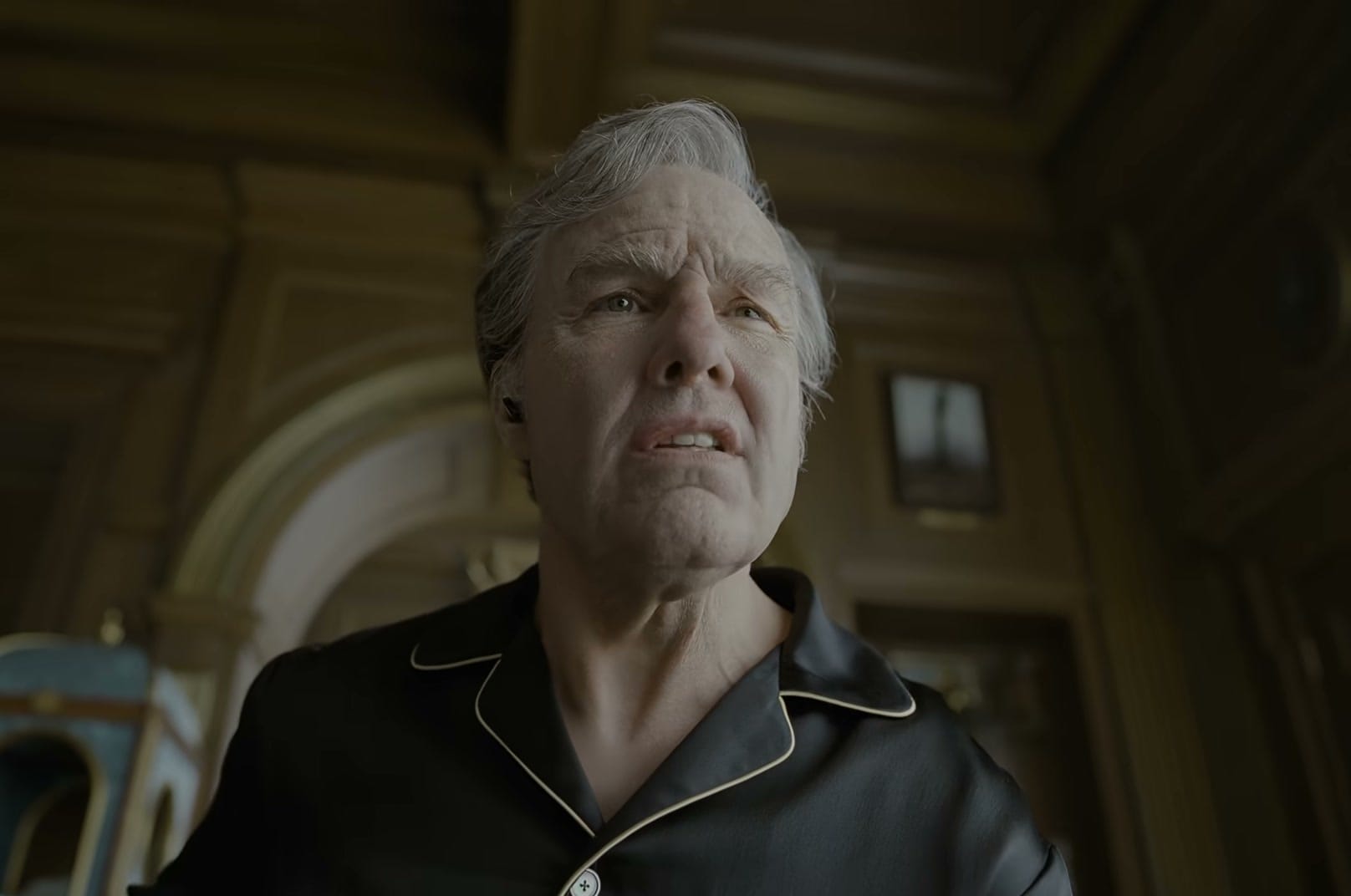
Gradually, the viewer is let in on the ruse: they are watching a stage play set in the future where the main character, Digger Rockwell, is portrayed by an actor named Curtis Markson (Tom Cruise). The film is visually inventive and in some ways beautiful, and “the play’s the thing” works well as a framing device for director Iñárritu.
But what’s most amusing is those who missed the joke. On the surface, the film is a send-up of the oil and gas industry, depicting the “fossil fools” (the title of the in-film play) who cock up the planet with their careless, extractive ways. The most negative reviews seem to focus on the film’s exorbitant $275 million cost (including marketing) and how terrible the movie has performed relative to other historical flops. It’s almost as if (and I can’t prove this) the oil and gas industry set out to tank the film as part of its defensive PR efforts.
A few weeks after launch, another social media campaign emerged in which “artists” like Neil Young (“the best film I’ve ever seen”), Ben Affleck, and Jane Fonda rallied to the film’s defense. Digger was back and enjoyed a modest uptick in its final two weeks before it was whisked on to its longer-term future on the backs of airplane seats.
Iñárritu, however, seems to have been commenting on the futility of film as a protest medium. Make all the climate disaster films you want — it’s not going to change our addiction to fossil fuels because they give us what we want: convenience, modernity, technology, motion. Should we stop being like that? Maybe. Will we stop? No.
That Iñárritu managed to get fossil fuel defenders at the throats of climate-woke boomers and that they both missed the message is an exquisite artistic achievement. Here’s to missing the point.
Zuckerberg
David Fincher’s The Social Network from 2010 was a fast-paced and fun retelling of Facebook’s founding story and original sins. Fincher kept screenwriter Aaron Sorkin in check (masking his penchant for Watergate references, primarily) while also keeping actors quickly moving through his wordy dialogue.
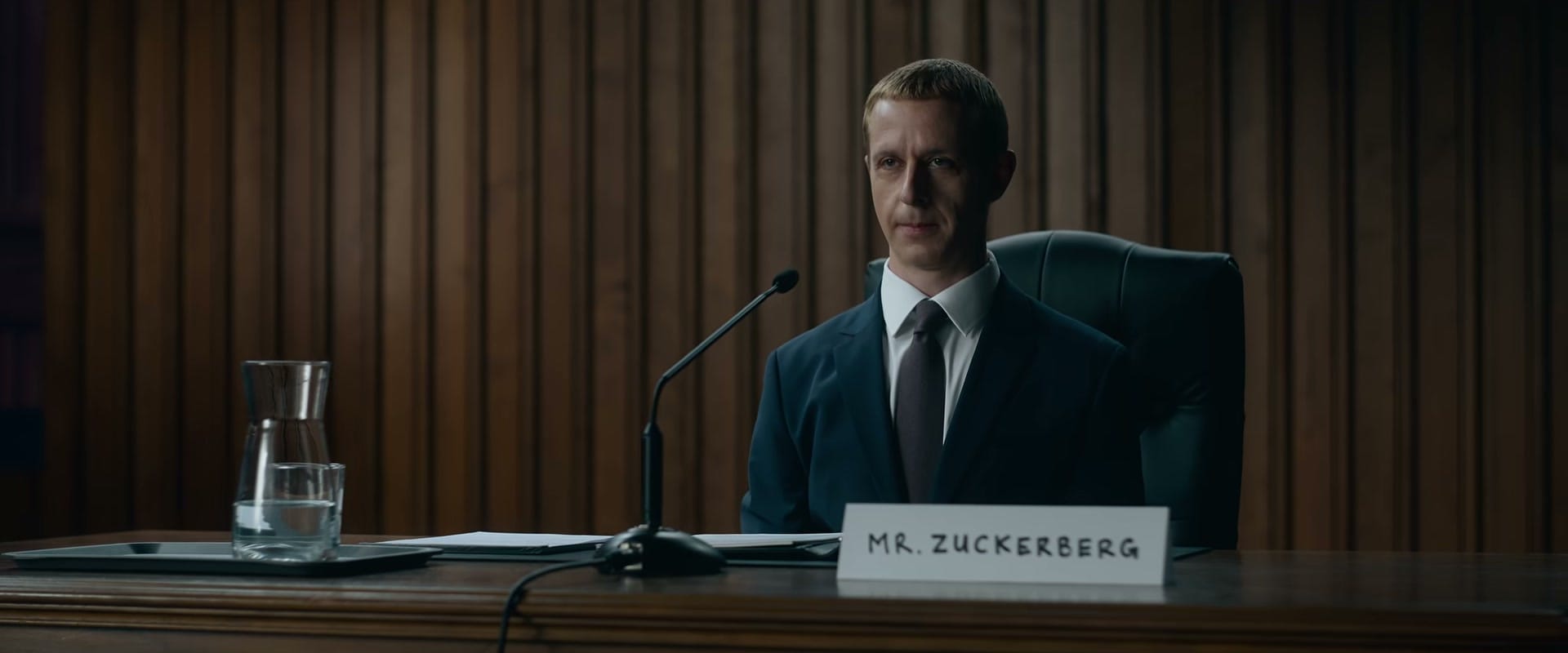
The Social Reckoning is made with love by some people I know and respect. But without Fincher, the film’s pacing suffers, and Sorkin is left to indulge his worst impulses, placing lines that could only be spoken by Vietnam-scarred septuagenarians into the mouths of people who are supposed to be in their 30s. It’s not believable.
The plot tracks the nerdy (but somehow also, hot?) Frances Haugen and her arc from data scientist to ethical crusader — she “sees things” and is thwarted by institutional pressures when she tries to raise concerns with superiors (and Jeremy Strong channeling Zuckerberg’s Caesar). So she turns to Wall Street Journal reporter Jeff Horwitz.

The film is so dull and devoid of action that Sorkin makes the unfortunate choice to doll up Haugen (Madison) in sexy outfits in her (utterly non-electric) late-night, data-driven meetings with Horwitz. The eye candy might be the only thing keeping viewers awake.
The more interesting story might have been about Haugen’s personal life. After moving to Puerto Rico, she married Alex Newman, a libertarian cryptocurrency entrepreneur who is part of a scene of tax optimization enthusiasts based there to take advantage of favorable tax laws around crypto.
Did Haugen have libertarian leanings towards decentralized technologies that ultimately led her to want to “blow up” Facebook’s Death Star? Social Reckoning viewers will never know, because the film never gets close to asking that question — framing her motivations as those of a conventional whistleblower with common-sense, apple pie values. The reality is probably more complicated.
“The film could be a safe and effective alternative to general anesthesia,” I texted a friend on leaving, rousing myself slightly after dozing off. It’s worth watching — but not for the story it thinks it’s telling — rather, its value is as a primary source document of a failed effort at sense-making, this time through fiction, and how telling and re-telling doesn’t always bring us closer to the truth.
Aras and Emin
Aras Agalarov, the Russian oligarch who became known as “Putin’s builder,” is best known for developing Crocus City, a Las Vegas–inspired shopping and entertainment complex on the outskirts of Moscow whose concert hall burned in a brutal terrorist attack in 2024.
In Breaking the West, filmmakers Bridget Hunnicutt (a National Geographic alumna) and Eddie Stafford filmed Aras and his pop-star son Emin during the 2010s. What they captured is a remarkable time capsule: a firsthand account of some of Putin’s most trusted interlocutors as they sought to position Donald Trump as president of the United States.
Superfans of the genre will find this a trip down memory lane (the Trump Tower meeting! adoptions! the Magnitsky Act!) but are supplied with new contemporaneously filmed tidbits that feel like recovered memories. The film manages to be suspenseful and gripping even as we know all too well how things turned out. It also doesn’t manage to reveal anything especially new. But if a viewer went in doubting the link between Trump and Russia, they would likely leave more convinced by the film’s steady drip of visual facts.
The film’s climax comes when Emin Agalarov films a music video for his 2018 song “Got Me Good” (which can really only be described as vapid mall music) featuring Donald Trump. The video strings together previously recorded footage of Trump with a party scene that features various actors portraying Donald Trump, Hillary Clinton, Jared Kushner, Ivanka Trump, and others.
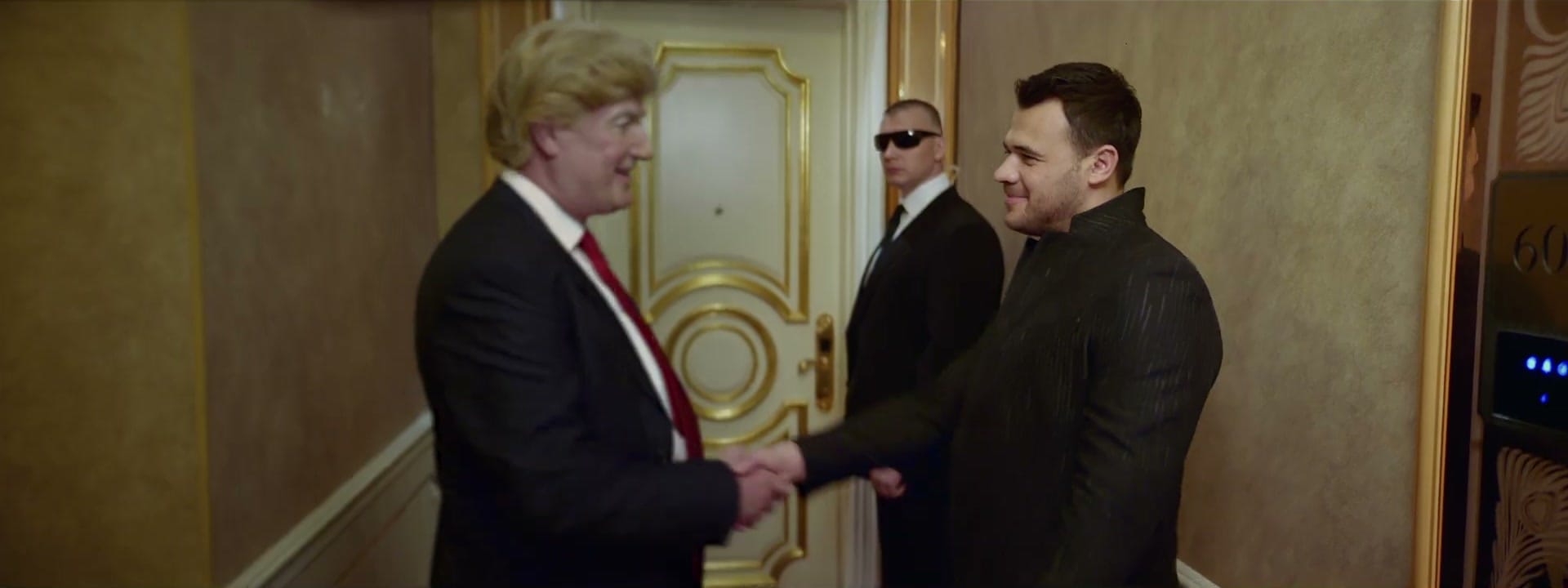
Seeing the documentarians film the filming of a video featuring actors portraying real characters is Fielder-level chaos, and a visual and intellectual treat. Will, somehow, a mistake, an offhand remark, an honest moment slip through that exposes something real and true? This is the gamble, and it’s one worth taking. The film rewards your attention with a deeper understanding and a question to ponder: were the last ten years an illusion?
If today’s media conglomerates get their way, you may not get a chance to see Breaking the West anytime soon (we saw it at a university screening in DC), thanks to the film’s surfacing of uncomfortable facts and, for Trump’s network of media allies, rubbing salt into old wounds. Until the film finds wider distribution, you can watch it by buying a FilmTrade card from Hunni Media here, or support its distribution with a tax-deductible donation through its fiscal sponsor, Women in Film & Video.
Just a Reflection?
In an era flooded in images real and fake, are they still useful by themselves for discerning reality? With no Walter Cronkite or Edward R. Murrow here to adjudicate each day’s events, there’s no “and that’s the way it was” or “good night, and good luck” to see us through. We’re on our own. We could do worse than to use film and art that arranges reality and fakery in elaborate ways in the hopes of catching a glimpse of anything true or real. ◼
Watch the Trailers
Additional Selected Reading
 Dave Troy
 Bobby Allyn