It’s Election Day. Here’s What We’re Watching, and Why You Can Vote With Confidence
Polls are open. The courts have held, your ballot leaves a paper trail, and your vote is secure. Here's what we're watching today, and what to expect next.
Polls are open across the country today for the 2026 midterms. Whether or not you have voted yet, we wanted to share what we’ll be watching over the next few days, what you can safely ignore, and how to help if you see something that looks off.
First, know that American elections are quite secure — particularly given all the improvements that have been made over the last twenty years, thanks to the work of activists and security professionals. The system you are voting in today is sturdier than much of the online conversation suggests. Nearly every ballot (about 99%, nationwide) leaves a paper record. Every state audits its count. And in the final week before the vote, when federal officials pushed hard to shape how ballots are counted, the courts held. Go vote!
Where things stand this morning
We have run our Election 2026 Live Tracker since early October. It rates the risk to the midterms on a five-step scale, and this morning it sits at Elevated — which is where it has been since it launched. This rating describes the pressure on the system and is not a forecast that the election will fail, or is insecure.
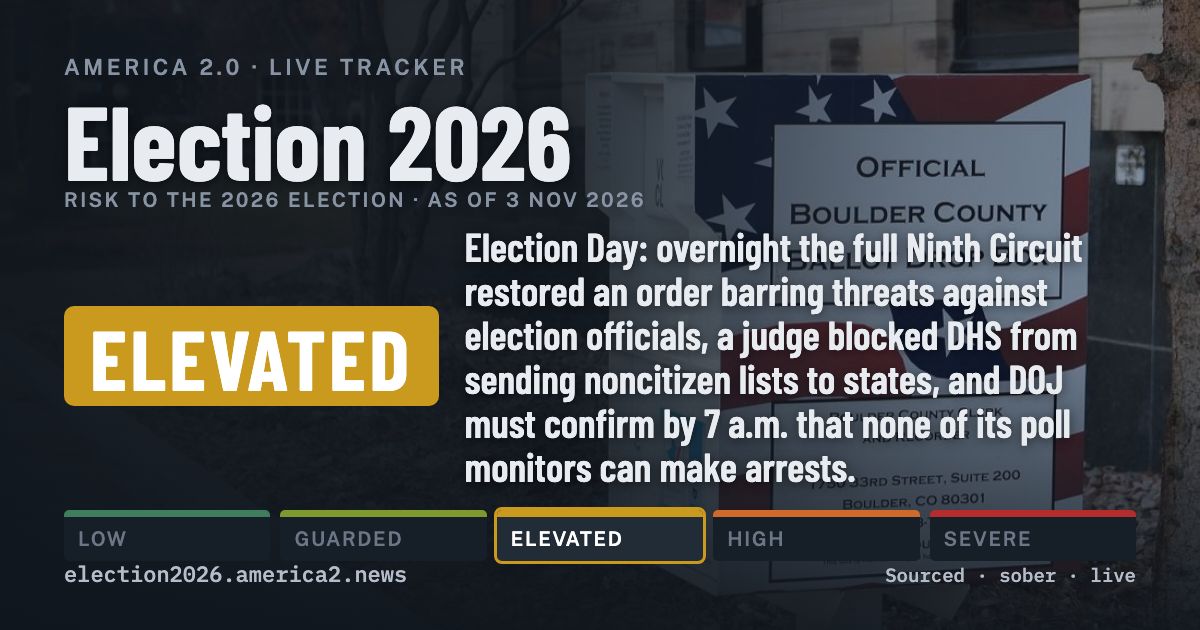
We selected elevated because the system has been under persistent, real threats. In the last ten days the Justice Department asked courts to set aside about 20,000 California mail ballots, to hold back the result of Alaska’s Senate race if the Republican narrowly loses, and to share Homeland Security’s lists of supposed noncitizen voters with the states. Every one of those requests failed.
The Supreme Court declined, with no noted dissent, to touch the California ballots. A judge dismissed the Alaska suit, which the department is appealing. Another blocked the noncitizen lists. Overnight, the full Ninth Circuit put back in force an order barring threats against election officials. Reuters summed up the week this morning: courts rebuffed the pressure.
Just as important is what has not happened, at least that we have observed so far: no troops, federalized Guard, or armed agents have been ordered to polling places. The Justice Department told a federal court that its election monitors will not be armed and will not include FBI or ICE personnel. No voting machine has been barred or seized. And no vote in this election, or any American election, has been shown to have been altered by external hacking or compromise.
Why your vote is safe
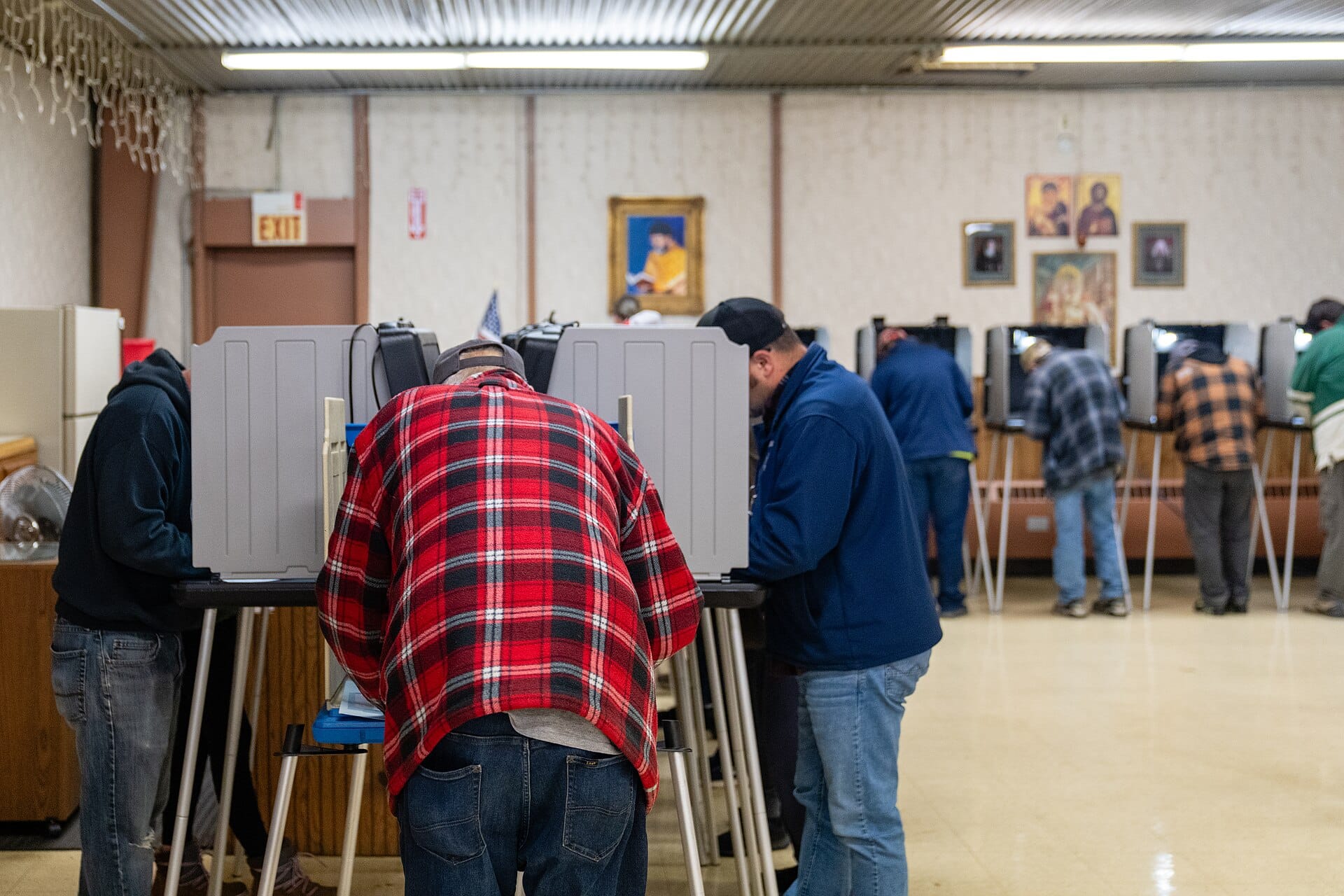
American elections are hard to break, by design. They run in more than 10,000 separate jurisdictions, on different equipment, under different rules, with no central switch to flip. About 99 percent of voters will cast a ballot with a paper record that can be recounted by hand, and roughly 70 percent mark that ballot by hand. All 50 states now audit their machine counts against the paper. Voting machines are typically not connected to the internet, and officials test them before every election. Election Day itself is fixed by federal statute; no president can move or cancel it.
To change an outcome, someone would have to defeat several of those safeguards at once, in many places, without anyone noticing. That has never happened. It is not going to happen today.
Voting tips for today
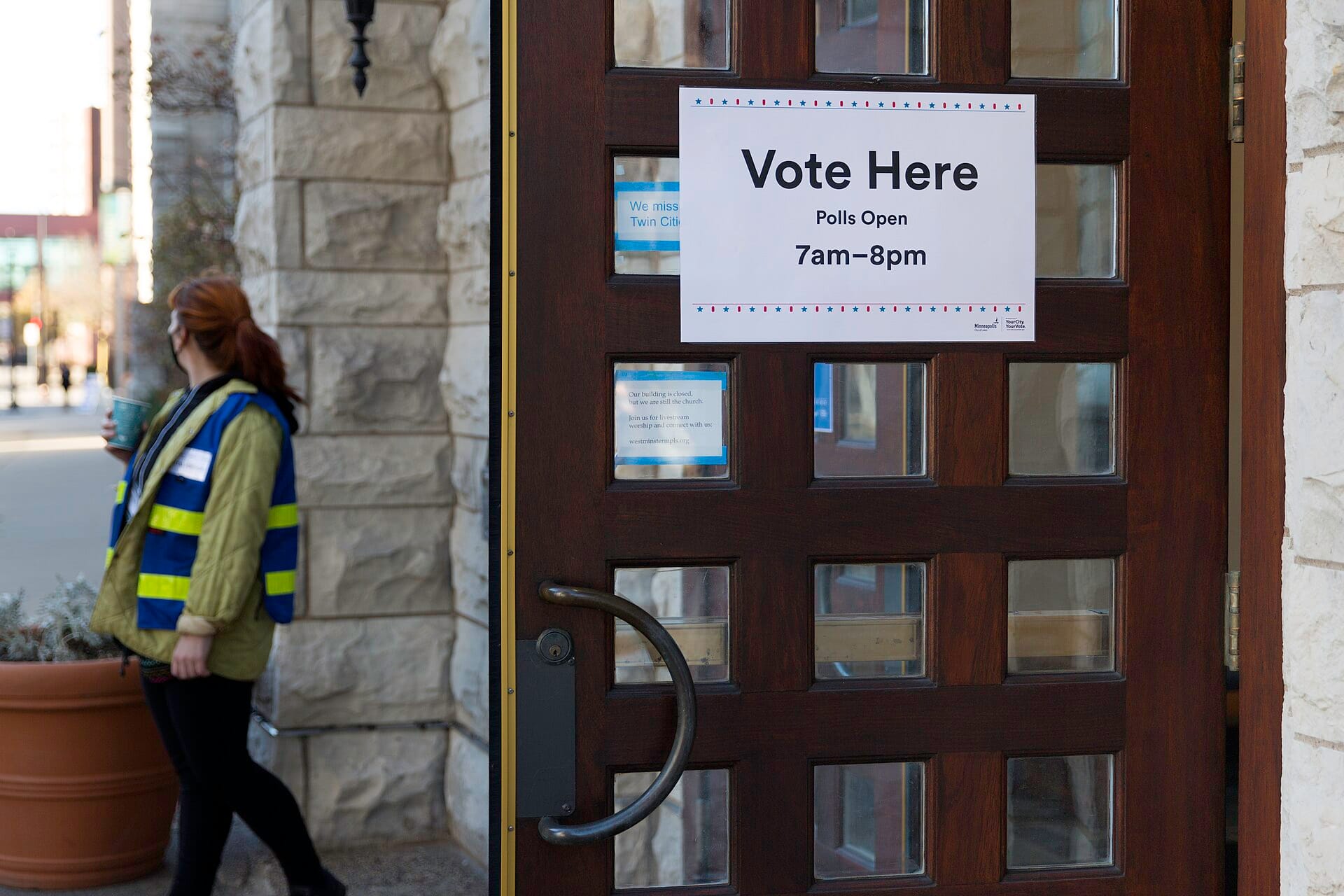
- Confirm your polling place before you go. Many states require you to vote at your assigned precinct. Vote.gov and Can I Vote, run by the secretaries of state, will send you to your state’s official lookup.
- If you are in line when the polls close, stay in line. You are entitled to vote. Don’t let anyone, including a well-meaning poll worker, wave you off.
- Bring ID if your state asks for it. Rules vary by state; if you don’t have the right ID, ask about your options, which usually include a provisional ballot.
- If you are told you aren’t on the rolls, ask for a provisional ballot. Federal law guarantees you one. It is counted once your eligibility is confirmed, and your state will tell you how to check that it was.
- Still holding a mail ballot? In many states it must arrive by the time polls close today, and the mail won’t get it there. Take it to a drop box or your county election office instead, and check your state’s rules on whether you can return it at your polling place.
- Check your ballot before you cast it. If you use a touchscreen, review the printed record or summary screen. A misread is almost always a calibration problem, not tampering; tell a poll worker and get it fixed.
- Observers are observers. Partisan poll watchers and federal monitors can look and take notes. Outside a handful of court-ordered jurisdictions, they have no more authority than any member of the public. Anyone who confronts you, demands proof of citizenship, or blocks your way is out of bounds. Intimidating a voter is a federal crime.
- If anything goes wrong, call 866-OUR-VOTE (866-687-8683). The nonpartisan Election Protection hotline has trained volunteers on the line all day. Report the problem to the poll workers too.
What we’re watching today
We're monitoring major outlets and official sources around the clock for anything that would alter our current rating. Here's what would actually matter today:
- Federal agents near polling places. The Justice Department has monitors in every state. Monitors taking notes is routine. Armed federal personnel at a polling place is not, and it would move our rating.
- Threats, hoaxes, and disruptions. Hoax bomb threats briefly disrupted voting at some polling places in 2024, and last week letters containing a white powder, so far found harmless, were mailed to election offices in at least 15 states. Expect more noise. We are watching for anything that actually closes a polling place or keeps people from voting.
- Plain breakdowns. Not every problem is an attack. Software errors, long lines, and staffing gaps cost people their votes every cycle, and they are quickly recast as fraud. We will report them as what they are.
- Foreign influence. U.S. intelligence says Russia is running a covert, AI-assisted campaign against candidates of both parties who support Ukraine. One Russia-linked operation has already posted deepfake videos smearing Senate candidates. These operations target what you believe, not how votes are counted. Be skeptical of anything shocking that surfaces today from an account you have never heard of.
- Claims that a slow count means fraud. This is the one we expect most. Mail ballots are verified and counted after the polls close, and in many states they can’t be processed early, so totals will shift for days. That is how the system works. A lead that changes overnight is a count in progress, not indication of a crime.
After tonight
Results will be certified county by county and state by state over the coming weeks, and the new Congress is seated on January 3, 2027. It is in this process where we think the real pressure will come: demands aimed at named county certifiers and secretaries of state, federal “findings” used to cast doubt on particular results, and any move to keep certified winners from taking their seats. Our tracker will follow all of it through January, and we will tell you plainly when something crosses from talk into action.
How you can help
If you see something worrying at the polls, call the hotline above first; they can fix problems in real time. Then tell us. Email editor@america2.news with the subject “2026 Election Security,” a link or photo, and where and when you saw it. We check every tip against credible sources. If it holds up, we'll reflect it on the tracker. If it doesn’t, we’ll report that too.
So, do the simplest and most powerful thing you can do today: vote, and bring someone with you. Together, we can restore the promise of American democracy.◼