New Podcast: Crypto Is Interested in You
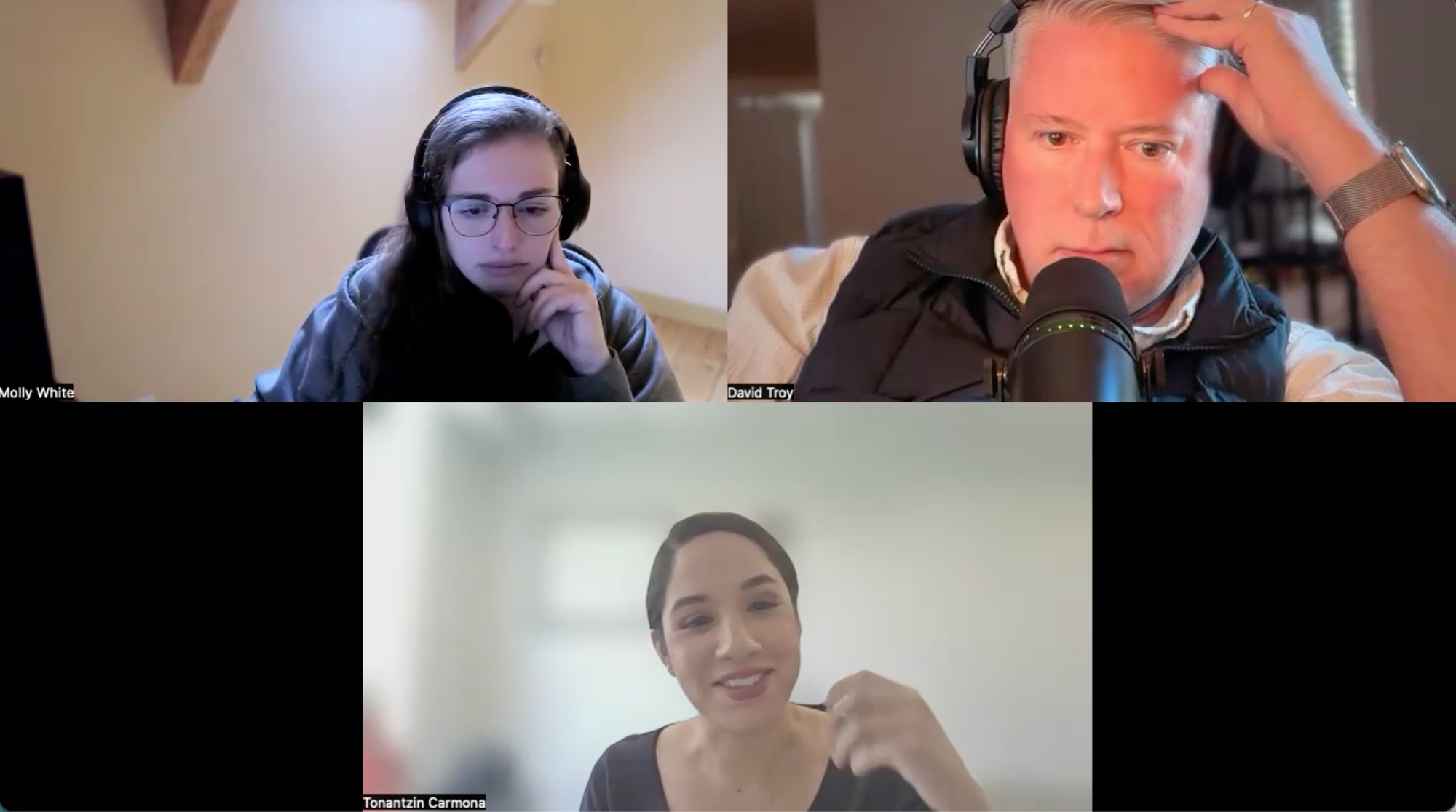
Avoiding crypto isn't enough — it needs to be actively countered and regulated to avoid widespread societal and political harms. This is the message that emerged from my conversation with crypto experts Molly White and Tonantzin Carmona.
“You may not be interested in war, but war is interested in you.” — Leon Trotsky
Avoiding crypto isn't enough — it needs to be actively countered and regulated to avoid widespread societal and political harms. This is the message that emerged from my conversation with crypto experts Molly White and Tonantzin Carmona.
Cryptocurrency has stopped being a finance story. Heading into the 2026 midterms, it has become political-money infrastructure — woven into our elections, our regulations, the Trump family's balance sheet.


To open Season 4 of Dave Troy Presents, I sat down with two of the sharpest people on this beat. Independent researcher Molly White tracks the industry through her websites Citation Needed, Web3 Is Going Just Great, and her election-money tracker Follow the Crypto.
Brookings Institution fellow Tonantzin Carmona maps the structural harm: who gets targeted, who gets hurt, and the policies that need to change.
The conversation is a plain-English tour of where things actually stand. The SEC has reversed course and largely stopped enforcing against crypto. The industry's super PACs spent hundreds of millions in 2024 and are gearing up for more — and as the Illinois primary showed, often in races where the ads never mention crypto at all.
The GENIUS Act regulating stablecoins has already passed; the far broader CLARITY Act is the industry's next big ask. And the Trump family's own crypto web — World Liberty Financial, the USD1 stablecoin, memecoins, Trump Media — sits at the center of a web of conflicted interests.
But there is hope. As Carmona puts it, financial systems are political choices, and the current arrangement is not inevitable. We can still decide who bears the risks, who profits, and whether our financial system provides a level playing field. From public payment rails like Brazil's PIX and America's under-used FedNow, to the simple act of asking candidates to refuse industry money, there are pathways forward that can benefit everyone.
Listen now!
We also highly recommend this 2024 paper, “The Distributional Consequences of Bitcoin.”
Molly White - mollywhite.net | followthecrypto.org.
Tonantzin Carmona - Brookings Institution.
Dave Troy Presents is published by America 2.0.