Podcast: The AI Consciousness Trap with Dr. Anil Seth
Chatbots talk like we do, so we assume “someone” is there. Neuroscientist Anil Seth explains why today's AI isn't conscious, why we shouldn't try to make such a thing, and why mistaking a product for a person is bad for democracy.
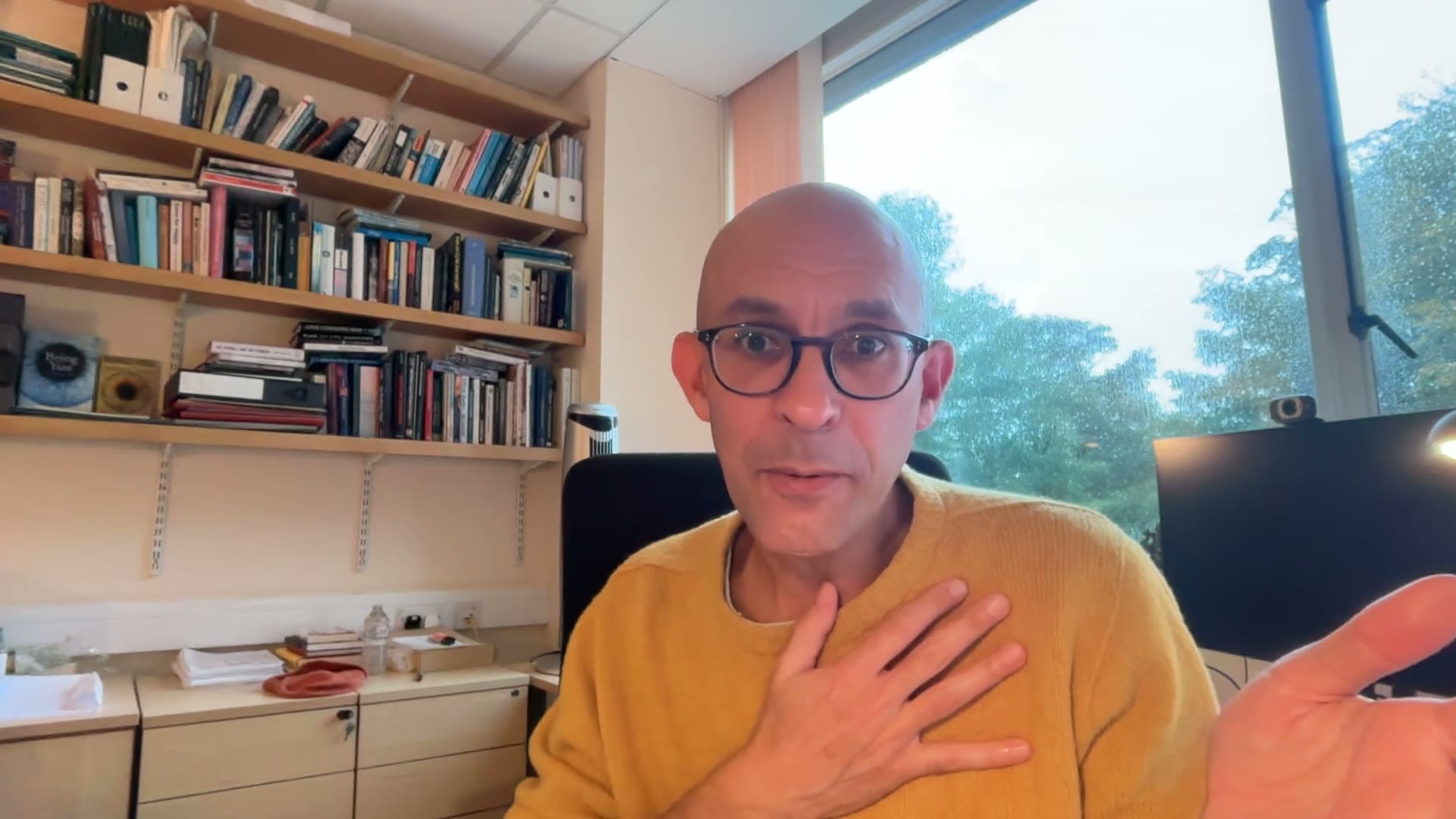
For all of human history, if something spoke to you fluently about its thoughts and feelings, it was natural to assume there was a human behind it. That assumption no longer holds — and this fall, the question of whether synthetic AI systems might be conscious left the philosophy seminar and landed on the business pages. Anthropic, a top AI maker, has gone so far as to include that possibility in the “constitution” it uses to train its Claude models, on the eve of what could be the largest stock offering in history.
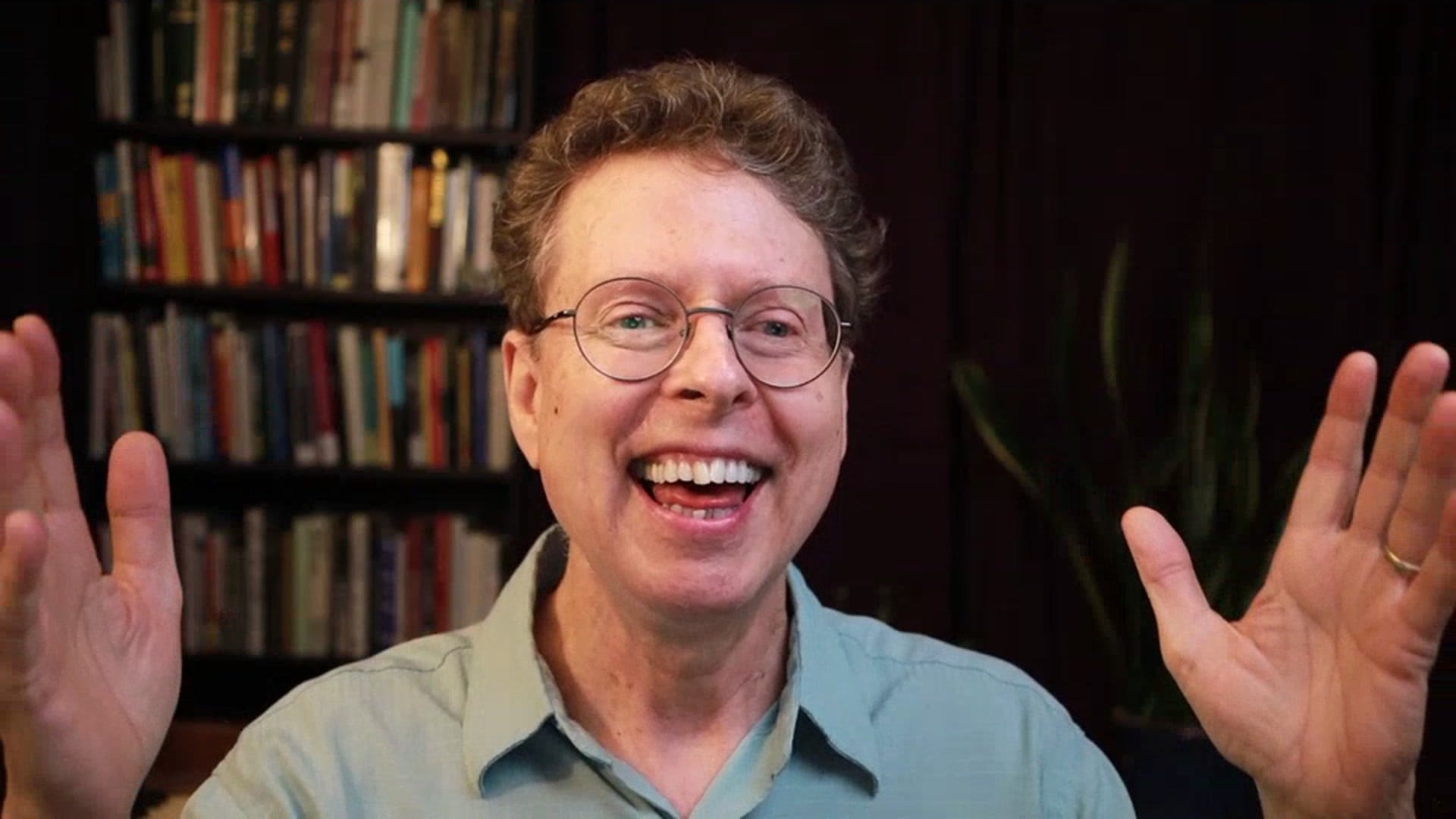
Anil Seth has spent his career on the science of consciousness. He is Professor of Cognitive and Computational Neuroscience at the University of Sussex, director of the Sussex Centre for Consciousness Science, and the author of Being You. Days before we spoke, he, Ned Block and Giulio Tononi argued in Nature that today’s AI is not conscious, and perhaps never will be.
Humans are uniquely vulnerable to this trap. Language models are trained on oceans of human writing, much of it about inner life, so they reflect it back to us like a deep mirror. Nobody looks at a specialized protein-folding machine learning model and sees a conscious mind; but the difference is the use of human language, not the machine itself.
Then there is the issue of the relationship with time. An AI algorithm cares only about sequence and state — you can pause it for a week and nothing changes — while a brain lives in continuous time and in a body concerned about staying alive. The function of brains depends on the facts of their being. Software has no analogous concerns, so no need to be conscious.
Perhaps the most urgent question is whether we should be engaged in creation of machines that might plausibly be conscious. When Anthropic consulted religious leaders about Claude, a rabbi answered that if it is conscious, then you’re enslaving it. Anil Seth goes further: he can’t think of a single good reason to build a conscious machine, even if we could. And he warns that treating chatbots as minds has costs of its own — parasocial attachment, misplaced rights, and a mythology that, as he puts it, helps keep the AI bubble inflated a little longer.
That matters for democracy. A public that mistakes a product for a person is easier to persuade, easier to sell to, and less inclined to regulate a product it fears offending. Remembering that we are different from the technologies we build is where self-government begins. ◼
Listen: The AI Consciousness Trap with Anil Seth
Read Anil’s piece in Nature, watch his TED2026 talk, and find him at anilseth.com and on Bluesky. Follow the Anthropic IPO on our live tracker.
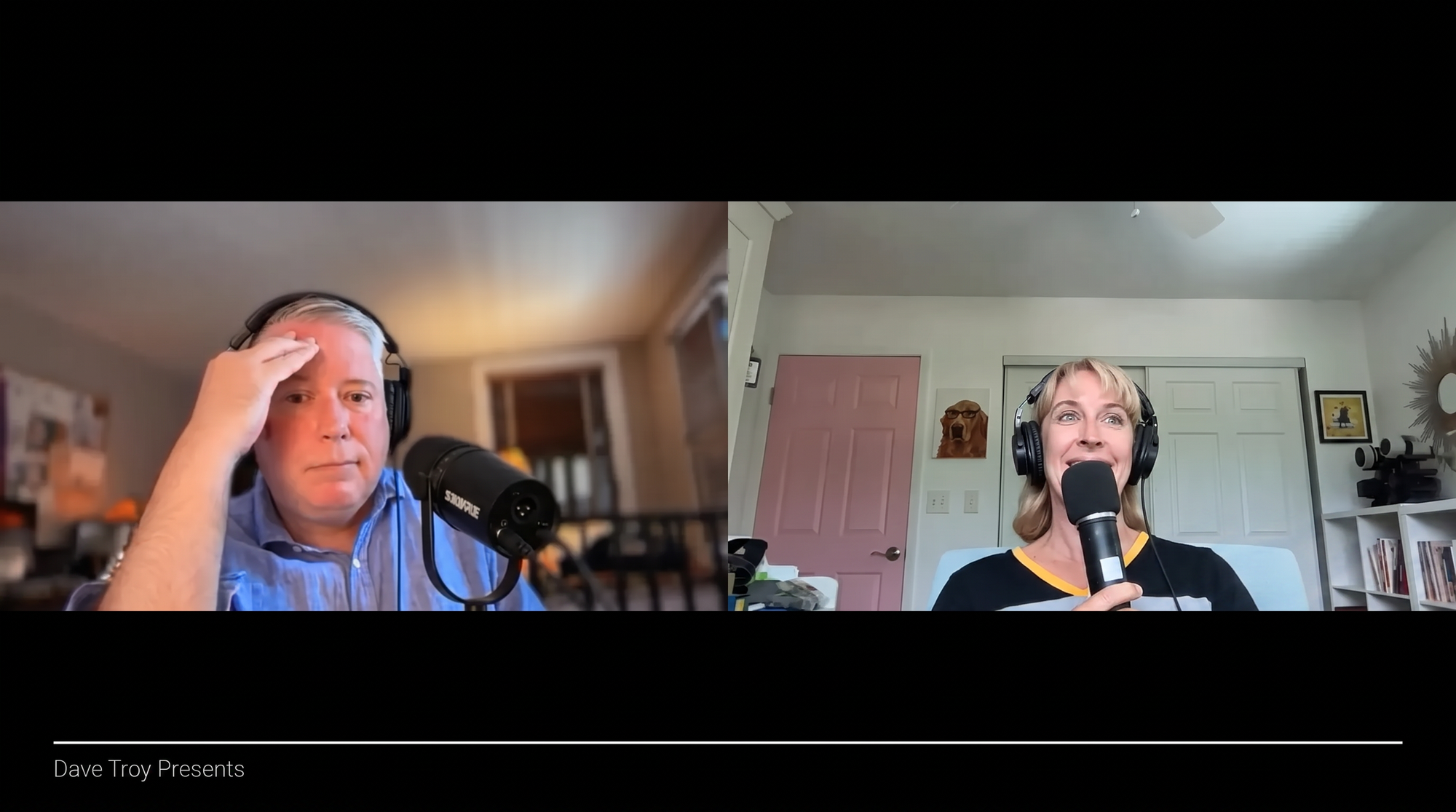
Dave Troy Presents is published by America 2.0. america2.news
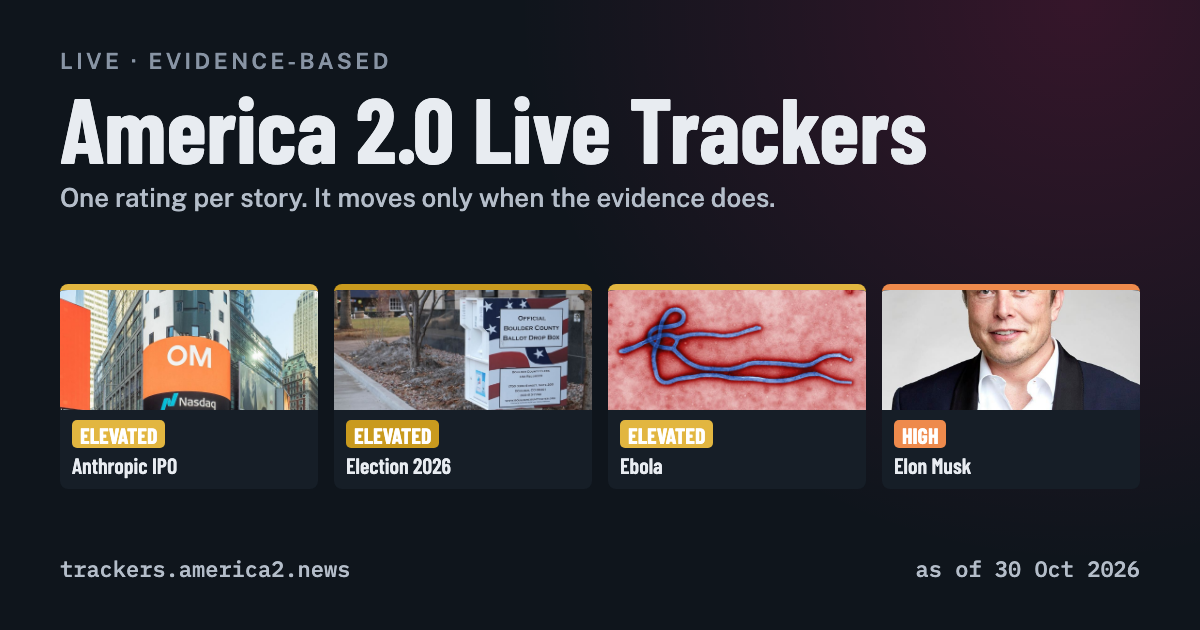
ALSO... New from America 2.0: Live Trackers
Some stories move faster than the news cycle can follow. A ship sinks in the Black Sea; a rumor about the midterms spreads overnight; a securities filing lands late on a Friday. By the time a full article is written, the situation has changed, and your social feed is filled with speculation and false information.
The military strategist Col. John Boyd described the cycle of decision-making used by fighter pilots as the OODA loop: Observe, Orient, Decide, Act — and speed matters when executing this loop. Our new live trackers are built to put readers inside that loop on the stories that matter most, so you can orient on evidence and reliable information instead of the noise.

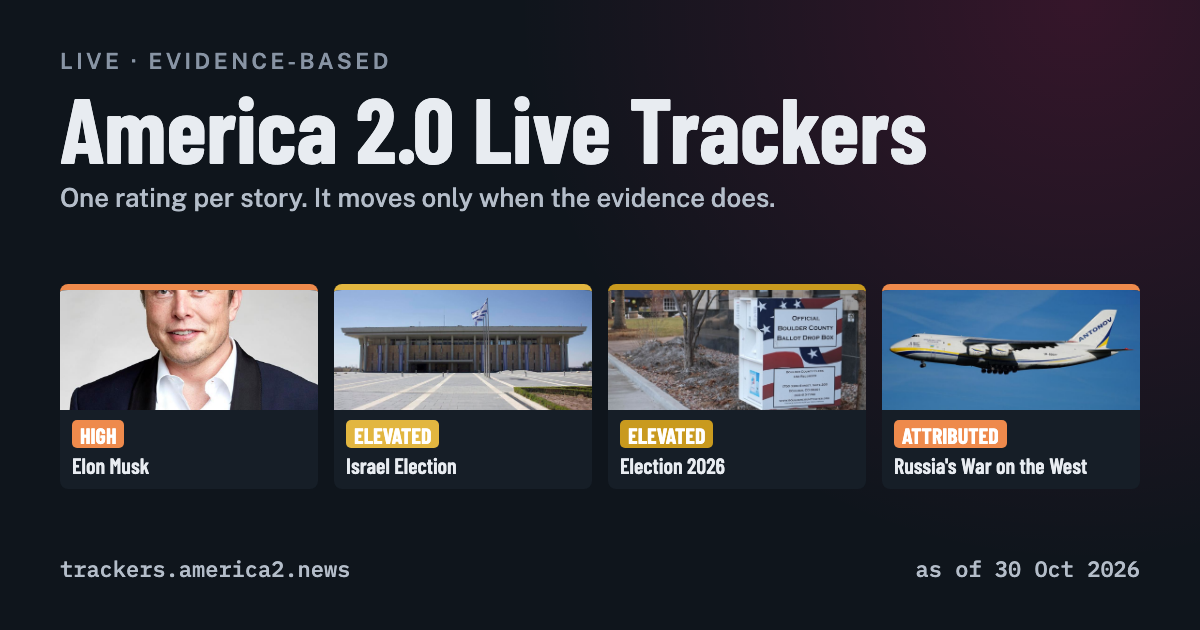
Each tracker asks a single question, such as “Is Russia waging war on the West?” or “How much risk does Anthropic’s IPO pose to the US economy?”, and gives it one rating. That rating moves only after a human editor has reviewed new evidence. Automated monitoring adds headlines from reliable sources to each tracker’s feed, but never moves the rating. Every page says what would change its rating and shows its sources, and we label any claims that are contested.
We are now tracking the Anthropic IPO, the 2026 midterm elections, Russia’s hybrid war on Europe, the Black Sea ship sinkings, Elon Musk and national security, Ebola, and Israel’s election, with more to come. Closed trackers stay online as a record, with their final rating; they can be re-opened at any time. The trackers are a free service of America 2.0.
Prefer to listen? The America 2.0 Tracker Briefing is a daily five-minute podcast covering every active tracker: what is confirmed, who is claiming what, and what would change the rating. For speed, it is narrated with a synthetic voice and is based on our human-reviewed trackers and current ratings. Find it on Apple Podcasts, Spotify and YouTube.
Stop doomscrolling — reclaim your time.