We Must Stand Together: America and Europe Share a Common Fate
The transatlantic alliance between the United States and Europe is under full-on assault. But we must not abandon it, writes A2 editor David Troy.
The Trump administration's National Security Strategy document, published Friday, went off like a bomb, finally making clear to ever-optimistic Europeans that the United States under Donald Trump has no intention of standing with Europe or Ukraine in either the short or the long term.
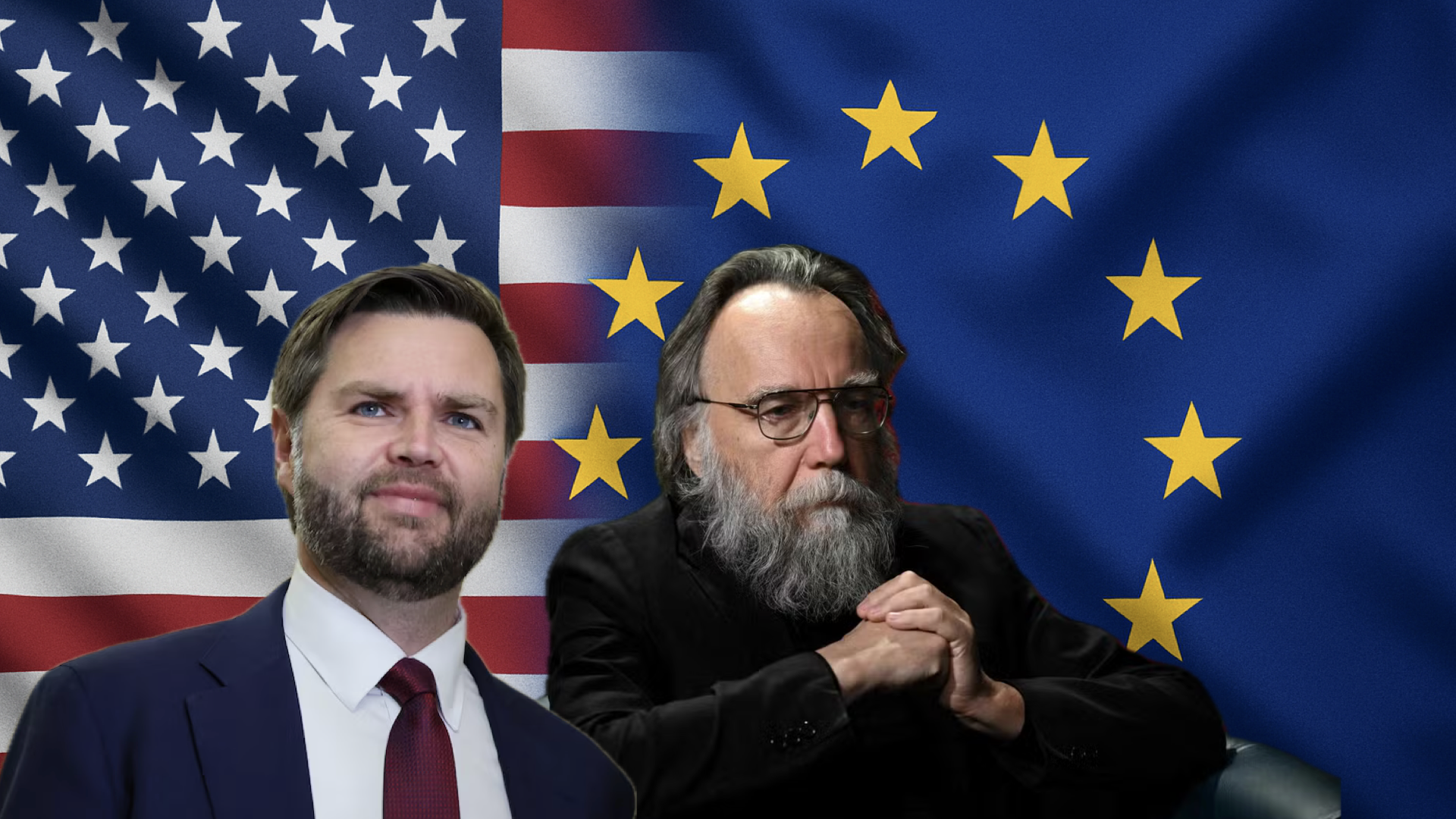
Worse, it is becoming increasingly clear that this is not some temporary aberration peculiar to Trump himself, but reflects the views of a growing faction within the administration. The document (which I'm hearing was drafted by people close to J.D. Vance) reflects positions jointly held by the Kremlin and by Vance's network of PayPal ‘libertarians’ who have adopted isolationist and nationalist worldviews.
Meanwhile the 2025 National Defense Authorization Act (NDAA), released Sunday, seems to offer a conflicting vision. Journalist Michael Weiss compiled a short breakdown of key provisions inside the legislation that would seem to conflict with the NSS worldview.
Notably, there are prohibitions on arbitrary alterations in aid to Ukraine (both in terms of materiel and intelligence) as well as any change in troop deployments in Europe, or alterations to NATO command structure. In short, whatever the NSS might say about US posture towards Europe, the NDAA tells a conflicting story. So, who's in charge here? Is the panic warranted? Is the NSS yet another expression of this administration's polemic cultural ambitions, while the NDAA reflects the reality of the career professionals tasked with running things at the Department of War? And how should Europe react to these conflicting messages?
Europe Must Step Up
It is clear that the transatlantic alliance between the United States and Europe which formed the backbone of the post-war order is being assaulted in ways that are new and, to many, unexpected. But we must not abandon it or reach the conclusion that it is unnecessary or obsolete. To the contrary, as America is captured and in distress, Europe is in a position to play a key role in promoting democratic values in its own borders as well as helping the United States to throw off its current antidemocratic infection. Here are some key steps Europe must take now to advance democracy globally.
• Build European internal security and resilience. Europe should be able to defend itself against Russia and other threats even when America is an unreliable partner. Increasing internal capacity means Europe can contribute more to (and distribute risks and costs across) the NATO alliance.
• Reject corporate tech hegemony. The world's largest technology companies (most of which are American) now operate more like nation states. Companies like Meta, X, and Google, have amassed billions of users and present a real challenge to the sovereignty of individual countries and to the European Union. Recent actions by the European Commission (EC) to regulate X over its trade practices (which are not censorship of any kind) exemplify the kinds of actions Europe can take to resist toxic, anti-democratic corporatist influence. European leadership here can serve as an example for US regulators who also need to curb antidemocratic corporatist influence. Notably, regulating American companies can be done without stoking broad-stroke anti-Americanism.
• Resist creeping anti-American populism. With America seeming more like an enemy than an ally in Europe, it's understandable that many people might be tempted to turn on the United States and the transatlantic alliance, but we must resist this urge on both sides of the ocean. America is capable of not only being a good ally but of exhibiting real leadership that fosters productive peace. And we can do it again. But we need to throw off our current infection to do it. Europe can help by expecting America to be a reliable ally, even as it can strive for self-sufficiency when we cannot.
Why The Alliance Matters and What's At Stake
If the US and Europe abandon each other, it's unlikely that democracy can survive on either continent. Putin and his corporatist allies are calling for the dissolution of the EU and are promoting (along with the NSS) far-right ultranationalist parties across Europe. Descent into conflict is inevitable if this process continues unabated.
Without Europe, the US will devolve further into antidemocratic populism. And without the US alliance, Europe will eventually be captured by the same processes. Believing otherwise is foolish. The Kremlin has developed its ‘political technology’ for amplifying division, supporting controlled opposition, and enacting systemic capture for decades. While they are not always geniuses or even especially clever, they are aggressive and persistent.
One dangerous strain of thought I've heard suggests that ‘Trumpism’ is a particularly American phenomenon which has been exported into Europe, and that severing the transatlantic alliance will somehow allow Europe to recover. But Europe is suffering from its own antidemocratic assaults from Russia, China, and the tech corporatists. Degrading the NATO alliance and other transatlantic ties will only make the US and Europe more vulnerable and easier to capture.
As defense analyst Kori Schake has pointed out, Trump's National Security Strategy isn't about security and it's certainly not strategy. It is an expression of worldview, and a declaration of alignment with Russia and tech corporatists in a larger culture war.
And even as the NDAA appears to offer a bulwark against the extreme positions taken in the NSS document, one must ask the question: does the rule of law apply in the United States in 2026? Can Trump or Hegseth simply defy the legalistic proscriptions of the NDAA in favor of their own cultural Weltanschauung? What are the consequences, if any, if they decide to pursue a purely vibes-based foreign policy?
With Attorney General Pam Bondi preparing lists of enemies for prosecution, it would seem nothing can stand in their way. And this is why Europe's role is so critical right now.
With still-functioning democratic processes, rule of law, and meaningful regulations, Europe is still in a position to halt corporatist attacks, which have become the front-line battalions in the Russian-Chinese assault on the West. If Europe can lead the way here, it may help us to do the same in the United States over the next three years.
If, however, Europe abandons the fight for transatlantic solidarity in favor of its own perceived short-term interests, neither of our democratic projects are likely to survive.
Europe, you are still, for now, healthy enough to act. Please do what's necessary now so that we can, together, become even more resilient later. ◼
Additional Suggested Reading
 Kori Schake
 AFP
AFP