Part Seven: Did Jeffrey Epstein Try to Sabotage the Lawyers Fighting Him?
Was Jeffrey Epstein part of Russia's broader war on the West? In this multi-part series we examine his obsession with nuclear scientists, eugenics, transhumanism, and influence. What we found will likely surprise you.
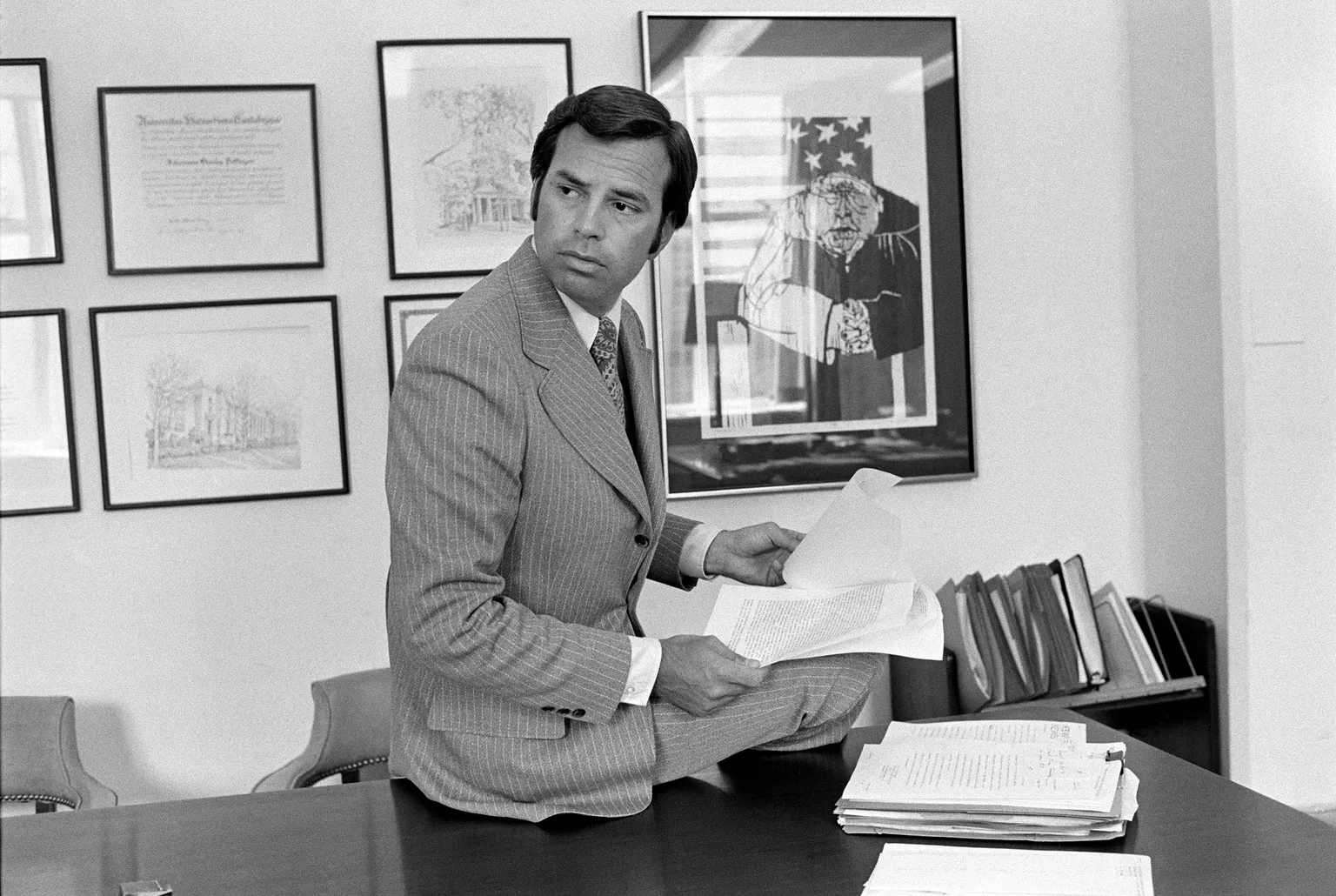
Recent reporting in The New York Times revealed that lawyer J. Stanley Pottinger and Jeffrey Epstein had worked together in the early 1980's as partners in a short-lived venture to develop tax avoidance schemes for wealthy clients.
The prior connection between the two men is noteworthy as Pottinger later partnered with Florida attorney Bradley Edwards in representing several of Epstein's victims. Pottinger's background also shows an ongoing pattern of involvement in sensitive intelligence matters.
Was Pottinger's association with Edwards part of a “controlled burn” strategy designed to protect Epstein's network?
Epstein's Initial Attack
Working as a solo attorney, Brad Edwards began representing several Epstein victims in 2008, filing three separate civil suits against him. The workload quickly overwhelmed Edwards’ practice, so he joined a larger firm, Rothstein Rosenfeldt Adler (RRA) in 2009 to obtain access to more resources.
Scott Rothstein, a flamboyant, well-connected lawyer and head of RRA, had invested in a case management software tool called Qtask to help his associates achieve his aggressive goals for the practice. Brad Edwards was using it to manage the complicated document sets and deadlines associated with his growing portfolio of Epstein-related cases.

The Qtask software was created by Reichart Von Wolfsheild, an eccentric software developer, and a contact of Rothstein's.
In January 2011, Epstein invited Von Wolfsheild to attend his Mindshift conference on Little St. James Island. According to Edwards’ 2020 memoir, Relentless Pursuit, Epstein asked Wolfsheild for help penetrating Edwards’ Qtask datastore in order to gain information on his active cases against Epstein. “Do you know Brad Edwards?,” Epstein asked Wolfsheild. “He’s a problem for me. To resolve this problem, I filed a lawsuit against him to throw flak at it,” Wolfsheild later told Edwards.
Epstein was referring to a lawsuit he had recently filed against Edwards, alleging Edwards played a role in a Ponzi operation run Rothstein, whose firm, RRA, had by then recently imploded when it suddenly collapsed. Epstein hoped he could slow Edwards down by pinning at least some criminal activity on him. Epstein claimed, without evidence, that Edwards helped design the scheme.
RRA had also invested in Qtask using funds generated from the Ponzi scheme, which meant that Wolfsheild was also being asked to divulge information on Qtask as part of the RRA bankruptcy proceedings. Wolfsheild refused to cooperate with either Epstein or the court, and reported Epstein's proposition to Edwards after returning from the Mindshift conference.
Ultimately, Epstein wasn't successful in his effort to extract information from Qtask or Von Wolfsheild. Edwards later recalled, “It would have been a smart move had it worked, but it didn’t. Reichart couldn’t be bought by the bad guys.” This may have paved the way for a later gambit — this time with his old friend Pottinger.
Pottinger's Cold Call
Edwards first came into contact with Stan Pottinger in the latter half of 2013. According to Edwards, Pottinger cold-called him late one night to discuss the possibility of working together with prominent attorney David Boies on a Florida case for an Epstein victim.
Pottinger had a colorful career as an Assistant Attorney General in the Department of Justice's civil rights division, as an investment banker, as a novelist and screenwriter, and as an attorney in private practice, he had come to see the exercise of power as a complex game involving blackmail, deception, and leverage — at least these are the themes suggested in his pulp fiction writing, titles such as The Fourth Procedure (1995), The Last Nazi (2003), and The Boss (2005).
Edwards suspected something might be off, so approached Pottinger with care; however, being familiar with David Boies (one of the country's most famous lawyers), he developed a relationship with Pottinger — notably, sharing information on active cases against Epstein, even as he harbored suspicions about Pottinger.
He also had found evidence in records obtained through discovery that Boies had called Epstein's house on February 25, 2005.
“Was this a benign thing? A return business call to a business call placed by Epstein? Or was he, as I feared, Epstein’s lawyer? A spy? There was only one way to find out,” Edwards wrote. Edwards proceeded to meet with Pottinger in New York. Concerned he was heading into a setup, he brought a concealed USB recording device into a one-on-one lunch with Pottinger at the Harvard Club.
Per Edwards’ account, Pottinger disclosed a limited relationship with Epstein, saying that “after he'd left the Justice Department in Washington, he'd worked as an investment banker in New York, where a client introduced him to Epstein. They were not in the same firm, but the two of them had shared an office for a few weeks. He may have thought he was being candid and forthcoming, but all it did was ramp up my suspicions.” Pottinger also denied any knowledge that Boies had a previous relationship with Epstein.
Seeking to clarify his questions, Edwards suggested that Boies join their lunch. Pottinger felt it would be better to go visit Boies at his office at 575 Lexington Avenue. This raised another alarm for Edwards — that building was the same one used by Epstein's personal attorney and fixer, Darren Indyke.
Boies was not immediately available to meet, so while they waited Edwards confronted Pottinger about the 2005 phone message. Pottinger confirmed that it was Boies’ cell phone number, and then left the room after Edwards further explained his concerns. Pottinger came back after a few minutes with the news that Boies would be unable to meet.
Despite these copious red flags, Edwards went back to Florida that day having “decided that Stan and David had to be on the right side with good intentions and that there was no grand conspiracy here after all. But man, they had certainly made me nervous. Or to be more accurate, Epstein had made me nervous. He was able to do that because he could control anyone, and I knew it.”
Edwards went on to collaborate with Pottinger and Boies, going so far as to form the law firm of Edwards Pottinger LLC in 2016 to focus on representing Epstein victims together. Would he have done that if he had known about their reported business relationship? Would victims have entrusted them with their cases had they known?
Virginia Roberts Giuffre, one of Edwards’ main clients at the time, would have had the most to lose. Edwards recounted how she spilled her story to Pottinger and Boies along with her intent to “stop Epstein once and for all.” Had she known that her information might make its way back to Epstein and Indyke, it seems unlikely she would have trusted these two potential interlopers at all.
What was the nature of the Boies-Epstein relationship in 2005? What has Edwards learned about the relationships between Boies, Pottinger, and Epstein since he first agreed to partner with them?
From Sabotage to Containment
At some point, it seems Epstein shifted from trying to disrupt Edwards’ cases to trying to shape the outcome of litigation. If Pottinger and Epstein maintained an ongoing relationship (and it seems plausible that they did), he would have a line into the thinking and actions of his most persistent legal opponent, providing significant advantages.

Blurring matters further, Pottinger developed a personal relationship with one of Epstein's earliest accusers, visual artist Maria Farmer. Farmer, whose initial 1996 FBI report was recently confirmed in Department of Justice documents, first met Pottinger in June 2016 in a meeting with Edwards at her residence in Paducah, Kentucky.
In 2017, Farmer, about 46 at the time, and Pottinger, 76, partnered together in a firm called Federal Anti-Fraud Enforcement, LLC, which was registered at Pottinger's home address in South Salem, New York. Farmer was employed by FAE and listed on its website as the “Chief Administrator of Website Services” and “Chief researcher and editor for online news and information.”
This relationship led to multiple conflicts of interest. Farmer has claimed that she and Pottinger were involved in a romantic relationship during the time she was a key witness. Additionally, Farmer's employment by FAE created a financial dependency while she was providing testimony against Epstein ally Alan Dershowitz.
Court documents also confirm that Pottinger formally intervened in the Giuffre v. Maxwell case as the attorney for non-party witness Sarah Ransome. He filed motions to restrict the scope of her deposition, demonstrating that Pottinger wasn't just an advisor to Edwards; he inserted himself between the court and the victims.
A Controlled Burn Specialist
A longitudinal examination of Pottinger's activities over the course of decades reveals a career laden with sensitive intelligence related cases. In particular, Pottinger was involved in multiple cases involving public perception and the generation of commonly accepted historical narratives, serving as both a kind of ‘keeper of official truth’ and a ‘controlled burn specialist.’
FBI files show that in 1973, Pottinger came to the aid of the Institute for Policy Studies (IPS), a left-leaning think tank that had received ongoing backing from Soviet-affiliated networks.
Mitchell Rogovin, counsel for IPS, became convinced that the organization was being surveilled by the FBI. Indeed it was, thanks to the group's ongoing coordination with the Communist Party USA, the Vietcong, and other radical groups, as well as its stated opposition to the FBI's existence. Rogovin demanded that the Bureau conduct a review to find any impropriety in its monitoring of IPS. None was found.
Not satisfied, Rogovin then contacted Stan Pottinger, assistant Attorney General, who initiated a comprehensive Department of Justice investigation into the Bureau's “black bag jobs,” more formally called “surreptitious entries” — or plainly, robberies.
Pottinger's investigation didn't find anything relating to surveillance of IPS — but it did manage to produce headlines mocking the FBI's counterintelligence division, which ultimately helped served Rogovin's purpose.
Pottinger's Portfolio
Stanley Pottinger also participated in shaping several other sensitive intelligence matters during his time as assistant Attorney General, especially during the period 1973 to 1976.
A full timeline of Pottinger's activities reveals an intriguing picture:
- 1973: Trump Discrimination Suit — As head of the DOJ Civil Rights Division, Pottinger oversaw the racial discrimination case against Trump Management. Secured a consent decree against Fred and Donald Trump for barring Blacks and Puerto Ricans from their apartments.
- 1973: Wounded Knee Standoff — Pottinger served as the chief federal negotiator during the 71-day armed occupation of Wounded Knee by the American Indian Movement (AIM). AIM was represented by Mark Lane, identified in the Mitrokhin Archive as a target for KGB influence operations.
- 1974: Kent State Review — Pottinger re-opened the federal investigation into the 1970 National Guard shootings of student protesters. A Grand Jury indicted eight low-level guardsmen but found "no conspiracy" regarding higher-level officials.
- 1976: "Black Bag" Case — Pottinger led the investigation that discovered the "Do Not File" safe in the FBI's New York field office, which contained records of illegal break-ins (black bag jobs). The discovery led to the indictments of top FBI officials Mark Felt and Edward Miller. Pottinger protected Mark Felt's identity as "Deep Throat" for nearly 30 years after, deftly using the legal process to hide secrets rather than reveal them.
- 1976: MLK Assassination Report — Pottinger authored the Department of Justice report re-investigating the assassination of Martin Luther King Jr. The report concluded that James Earl Ray was the lone assassin and that there was "no evidence whatever" of FBI complicity in the murder.
- 1976: Orlando Letelier Case Review — Pottinger negotiated directly with CIA Director George H.W. Bush regarding evidence in the assassination of Chilean diplomat (and IPS fellow) Orlando Letelier in Washington, D.C. They reached a compromise which allowed the CIA to protect "sources and methods."
- 1980: "October Surprise" Deal — As told in Craig Unger's Den of Spies, Pottinger represented arms dealer Cyrus Hashemi and participated in meetings in Madrid to delay the release of US hostages and was recorded on wiretaps advising on illegal arms shipments to Iran. He avoided indictment for the arms embargo violations and the "October Surprise" allegations, though reports indicated he was under federal investigation for conspiracy.
- Early 1980's: Epstein Partnership — Pottinger shared a penthouse office at the Hotel St. Moritz with Jeffrey Epstein. The two pitched "tax-avoidance strategies" to wealthy clients, establishing a professional and financial bond.
- 1995: Literary Reinvention — Pottinger pivoted from law and banking to become a novelist. He published the best-selling novels that draw on his experiences in the world of intelligence and the law.
- 2014: Edwards/Boies Legal Alliance — Pottinger "came out of retirement" to represent Epstein victims, recruiting high-profile attorney David Boies to the cause. He formed the firm Edwards Pottinger and became a primary legal strategist in the civil cases against his former office-mate, Jeffrey Epstein.
- 2016: DOJ Backchannel — Pottinger met with SDNY Assistant U.S. Attorney Amanda Kramer on February 29, 2016, to press for a criminal prosecution of Ghislaine Maxwell, using evidence from Virginia Giuffre and Sarah Ransome.
- 2019: Patrick Kessler's “Hot List” — Pottinger and Boies engaged with a fraudster named Patrick Kessler who claimed to have sex tapes of Epstein’s powerful associates. Texts revealed Pottinger discussing a "hot list" of billionaires and a 40% contingency fee for settlements; the scheme collapsed when Kessler was exposed as a fraud, risking undermining victims' credibility. Pottinger engaged in over 1,000 pages of encrypted Signal text messages with Kessler. Pottinger claimed he was purposely deceiving Kessler to gain evidence.
Pottinger's ubiquitous fifty-year presence in sensitive cases places him in the top echelon of the legal, governmental, and intelligence realms. If Epstein didn't recruit him to infiltrate Edwards’ legal team, he must have been very alarmed to see his old well-connected friend emerge as opposing counsel.
What We Know Now
Epstein did not mention Stan Pottinger much in the emails released by the Department of Justice. There was one text message where Steve Bannon described the Pottinger family as “rats,” but Epstein didn't share his own views. Other emails relate to the various ongoing Edwards/Pottinger legal cases.
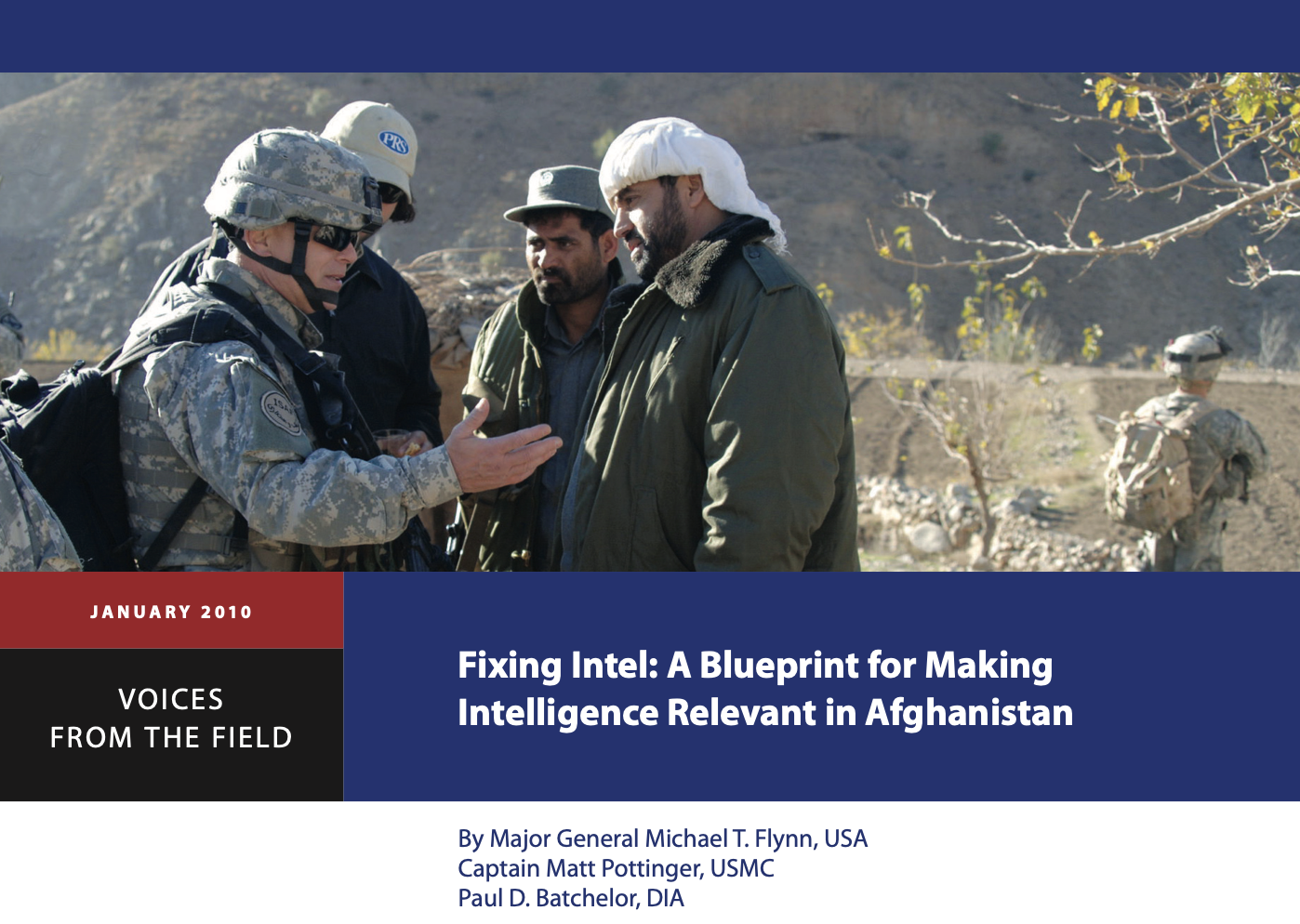
Matthew Pottinger, Stanley's son, also became an advisor to Lt. Gen. Michael Flynn, who was pushed out of the first Trump administration for lying to the FBI about his communications with Russian ambassador Sergey Kislyak.
Matt Pottinger later served in the Trump administration as Deputy National Security Adviser from 2019 to January 7, 2021 — he resigned in the wake of the January 6th insurrection, objecting to Trump's behavior. Matt Pottinger advised the administration primarily on matters relating to China, and himself has significant ties to that country. He worked as a journalist in China for Reuters and the Wall Street Journal from 1998 to 2005, and currently serves as Chairman of the China Program at the Foundation for Defense of Democracies (FDD).
The overall picture is that Epstein clearly intended to try to steer the cases brought against him, first by trying to enlist Reichart Von Wolfsheild in a spying scheme. And the extent of his prior relationship with Stan Pottinger was not disclosed until recently.
The nature of Pottinger's involvement suggests a pattern of gatekeeping consistent with his handling of the Watergate ‘Deep Throat’ secret. Just as he withdrew a grand jury question to protect Mark Felt from exposure, his 2017 representation of Epstein victim Sarah Ransome allowed him to manage the flow of evidence regarding Epstein's surveillance systems — systems Pottinger likely knew about from their shared history. Furthermore, his involvement in the 2019 Patrick Kessler affair, where he discussed a ‘hot list’ of billionaires and a 40% contingency fee for silence, arguably sabotaged the credibility of the victims’ legal team, risking framing their quest for justice as a mercenary shakedown.
Pottinger and Epstein are mirror images of each other, both cultivating trust and connections in powerful networks. Pottinger acted as intermediary between the worlds of intelligence and the legal establishment, while Epstein lurked behind the scenes pulling strings and brokering deals. It's not surprising their paths would cross once again. ◼
J. Stanley Pottinger died in November 2024. We reached out to Mr. Edwards to ask about Epstein's relationship with Pottinger, but have not yet received a response.
• Part One: Just what was Jeffrey Epstein doing in Santa Fe?
• Part Two: Jeffrey Epstein, John Brockman, and the Third Culture
• Part Three: What was Epstein's “Edge” agenda?
• Part Four: Making Sense of Epstein's Russia Ties
• Part Five: Epstein, Iowa, and the Maharishi
• Part Six: Epstein and the (Dangerous) Game of Evolution
See also: “What We've Learned from the Latest Epstein Documents”
 Dave Troy